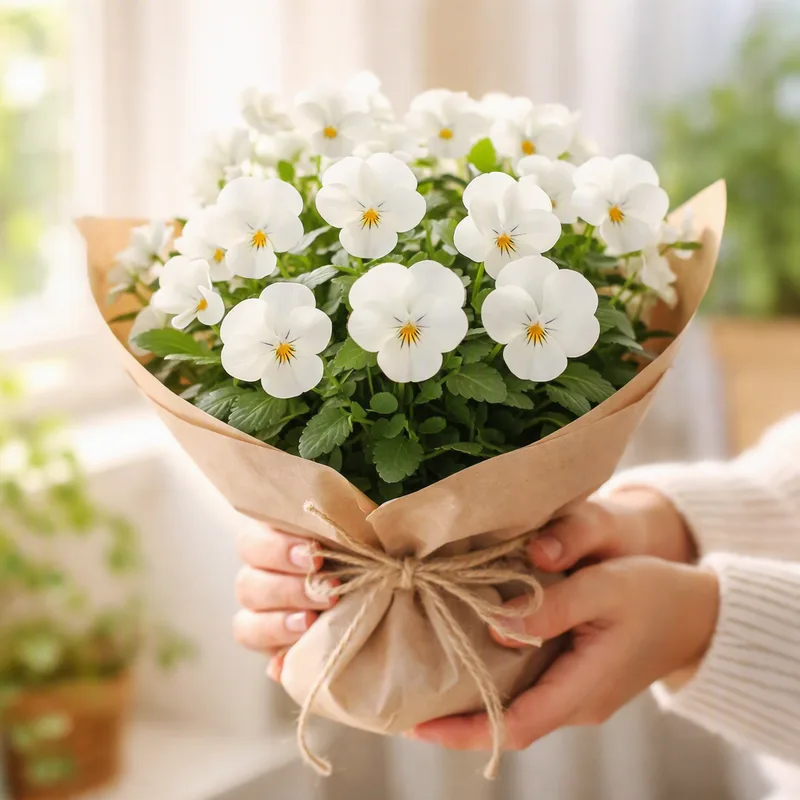
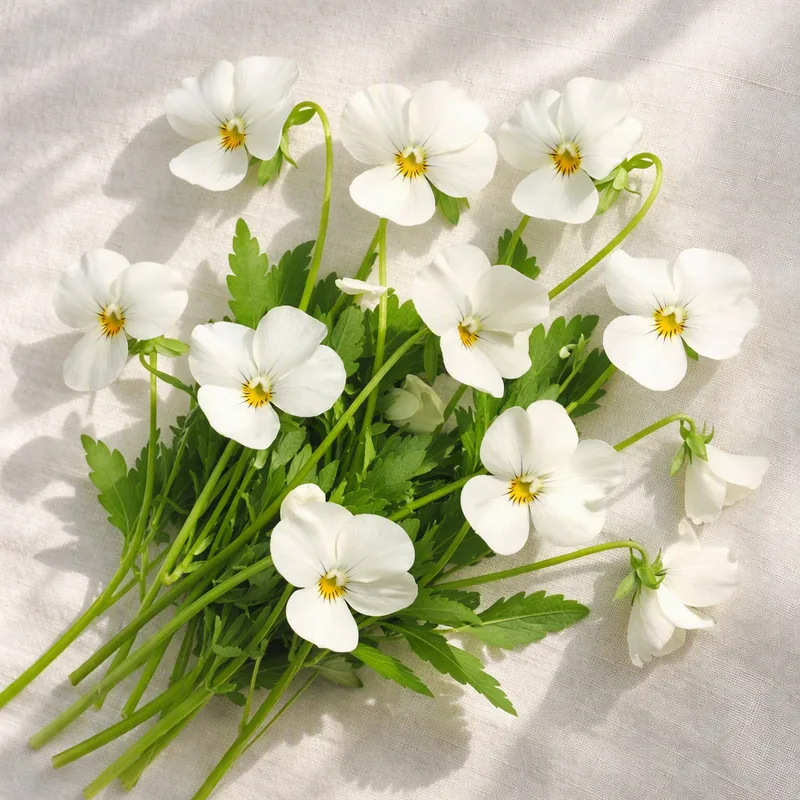
Do white violets exist?
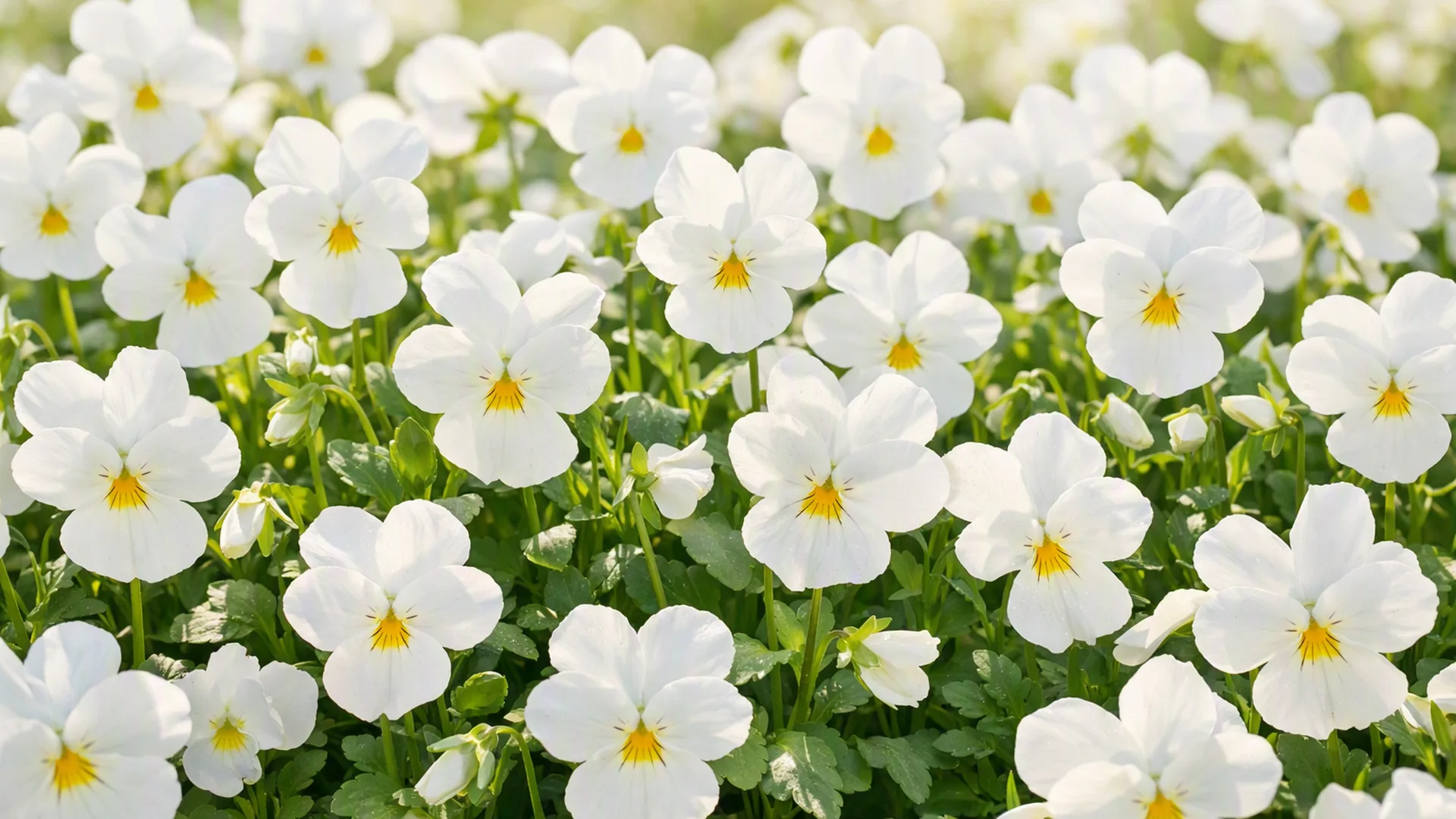
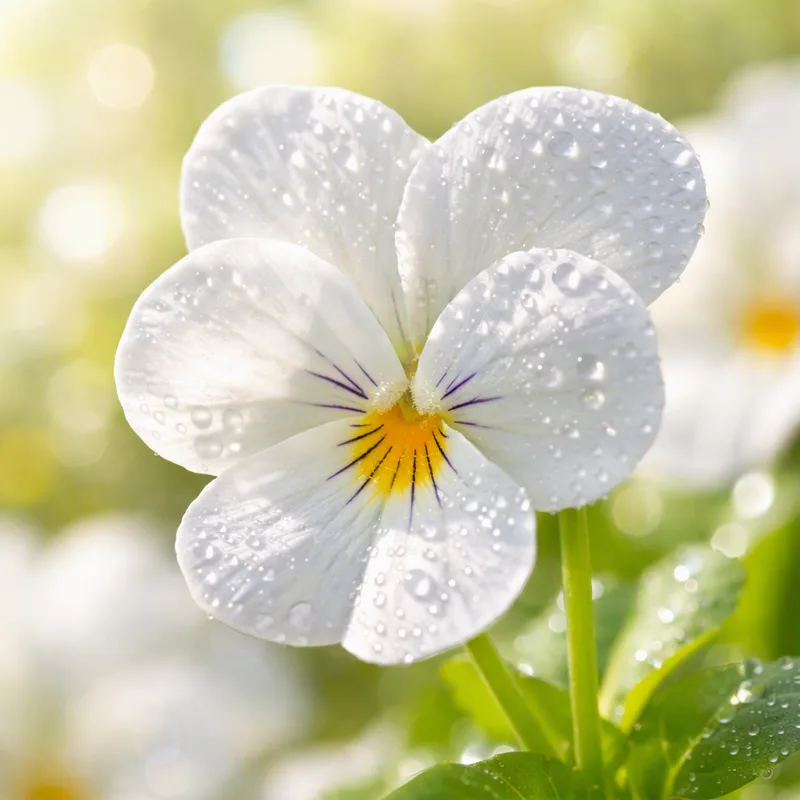
Yes. The wild sweet violet is usually deep violet, but a white form turns up naturally and is also sold as Viola odorata 'Alba' or under cultivar names such as 'White Czar'. They keep the sweet scent that gives the species its reputation. White pansies and violas are also bred widely for borders and window boxes.
Where they do well
- Light shade under shrubs or a hedge, with soil that stays reasonably moist.
- Neutral to slightly alkaline soil, which suits many Viola odorata plants, although they also manage in chalky soils.
- Pots on a patio, where the scent can be enjoyed at nose height in February and March.
Sweet violets spread slowly by runners and can self-seed gently. Once they settle they form patches that return each year with little help.
If you keep a window box, tuck a few violet plants along the edge in autumn and they will often flower in late winter on mild days.
Using them
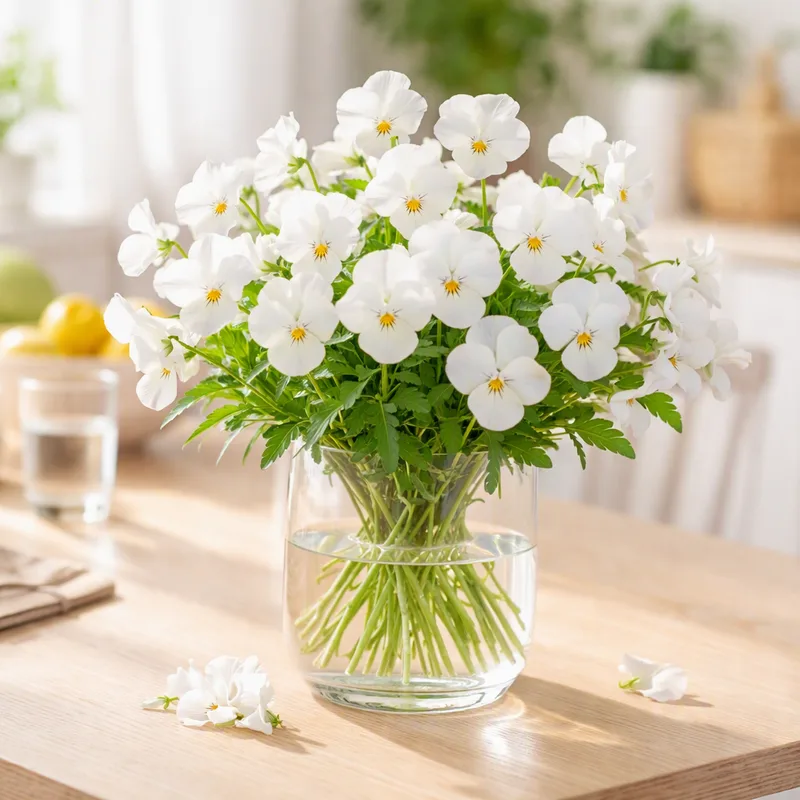
A small posy of white violets in an egg cup is a classic way to bring the scent indoors. They are delicate, and the stems are short, so pick them with a little foliage and keep them in shallow water.
White violets have traditionally been linked with innocence and modesty. Because they flower so early, they also turn up in spring tributes and small gifts for Mothering Sunday.
Safe or not
Pansies are regarded as non-toxic by the ASPCA, yet sweet violet has no entry and its roots hold saponins. If you plan to eat flowers, make sure you identify them correctly and avoid those treated with chemicals.