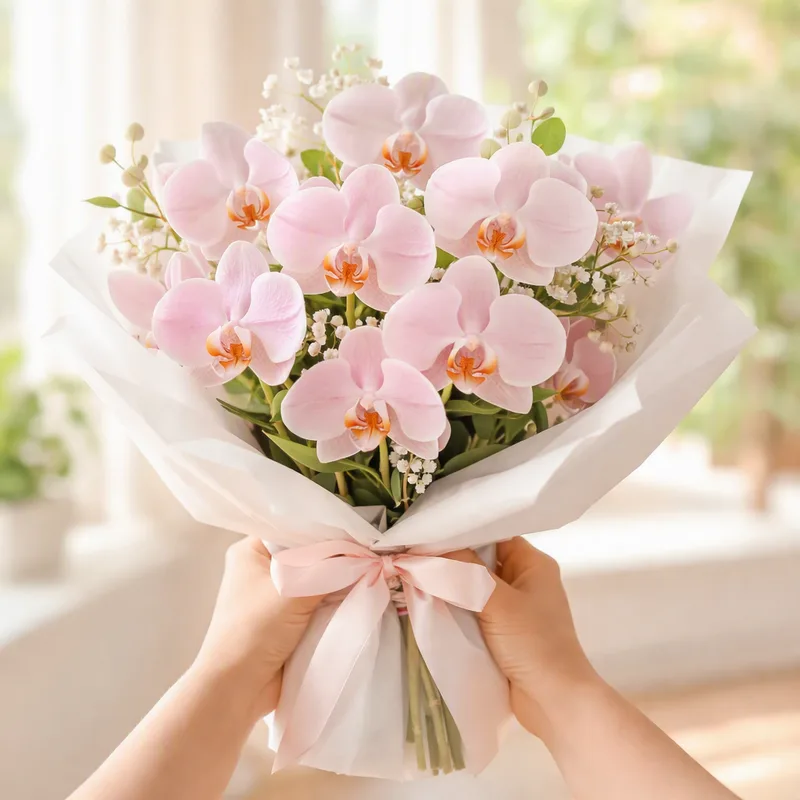
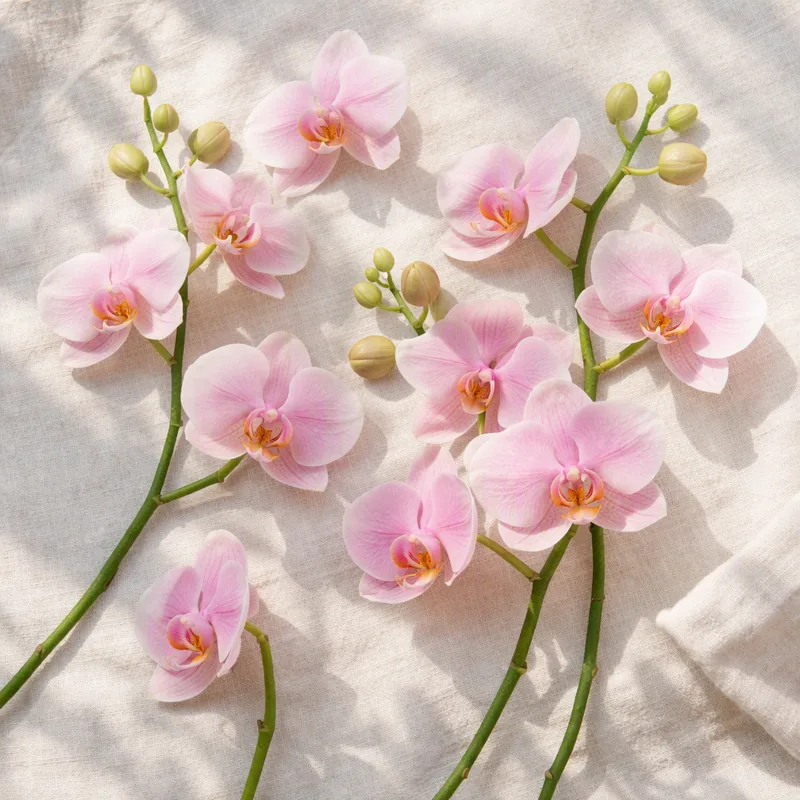
A range of pinks
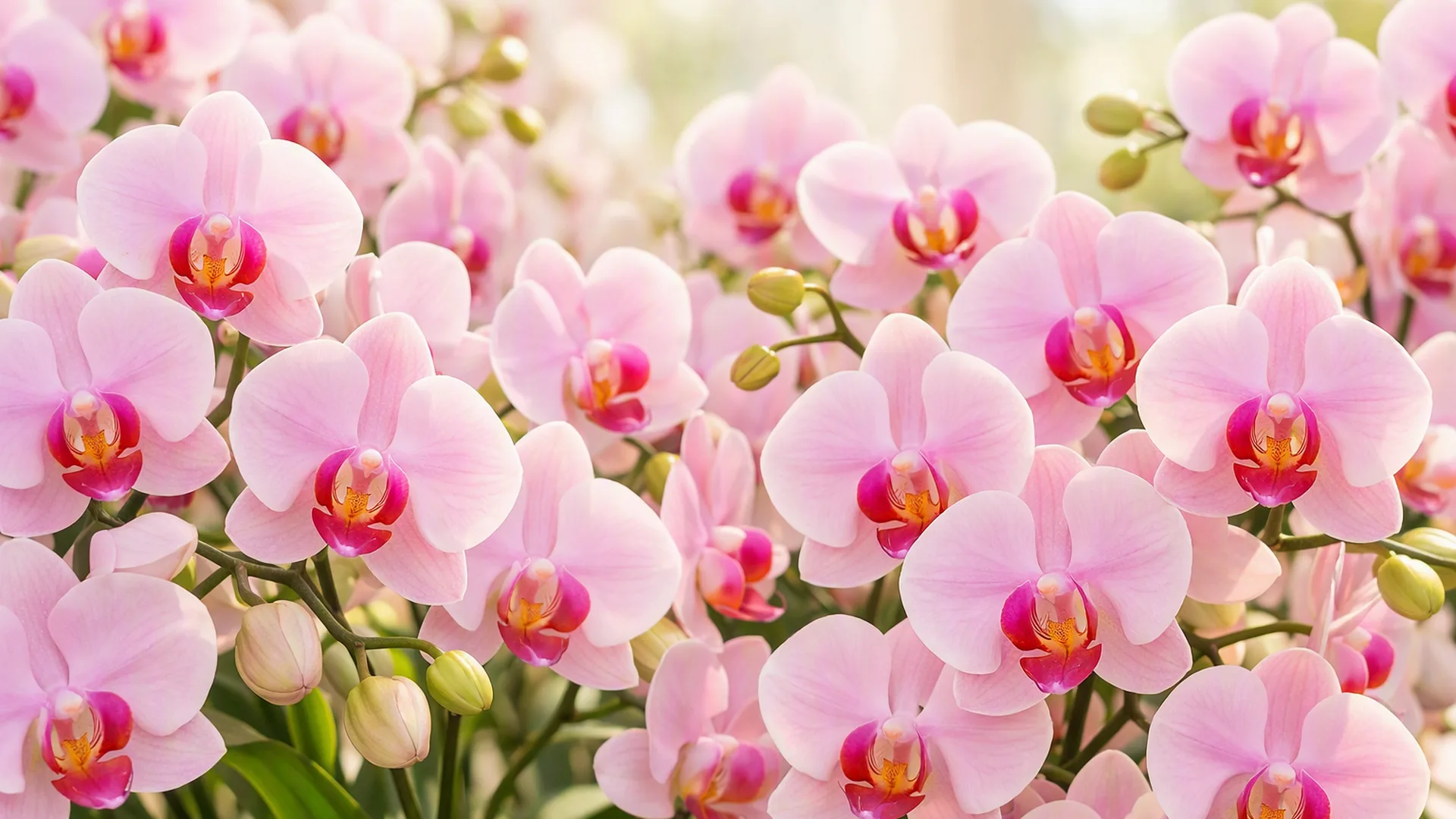
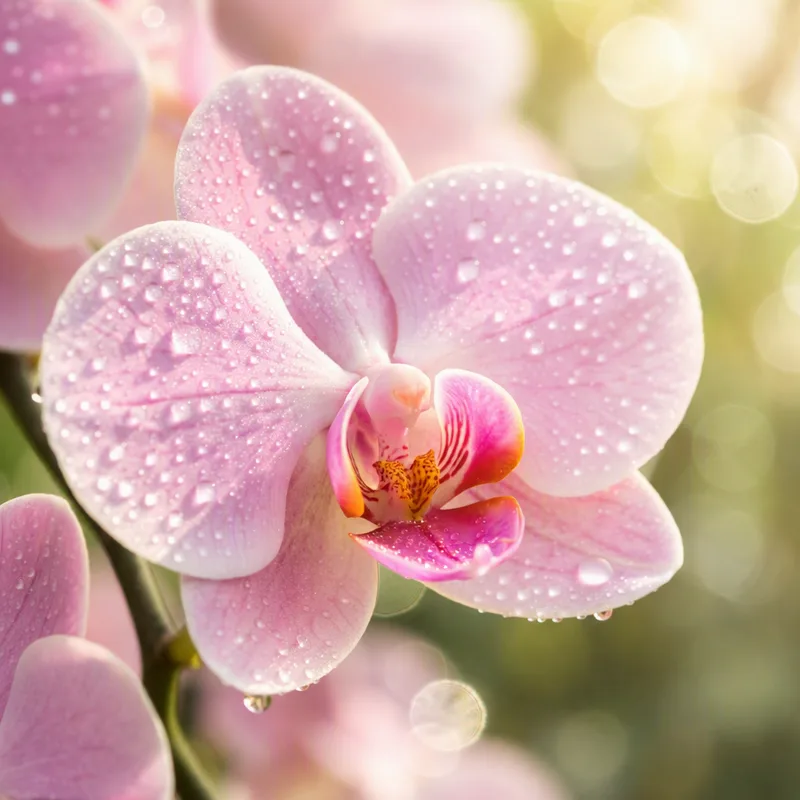
Pink Phalaenopsis run from the palest blush through candy pink to rich fuchsia. Some are streaked or speckled with a darker tone, and many have a contrasting lip. Wild species such as Phalaenopsis amabilis are white, so the pinks seen on every supermarket shelf owe a great deal to plant breeders. The colour range explains the searches for Phalaenopsis colours: once you start looking, almost every shade between white and purple is available.
Care in a nutshell
People who search for Phalaenopsis care are usually after the same few answers.
- **Light:** bright but filtered. Pink flowers can bleach if they sit in direct sun.
- **Water:** soak the pot about once a week and drain it well. Silvery roots mean it is time to water, while plump green roots mean it can wait.
- **Warmth:** aim for a constant room temperature, ideally above about 18 degrees Celsius, and avoid draughts.
- **Compost:** orchid bark, not ordinary potting mix.
Encouraging more flowers
Once the display is over, you have two choices. Trim the spike to just above the second or third node from the base and a side branch may appear, or cut it off low down and wait for a stronger new spike. Cool autumn nights, a slight drop of several degrees, are often what triggers the plant to start again.
A gift with staying power
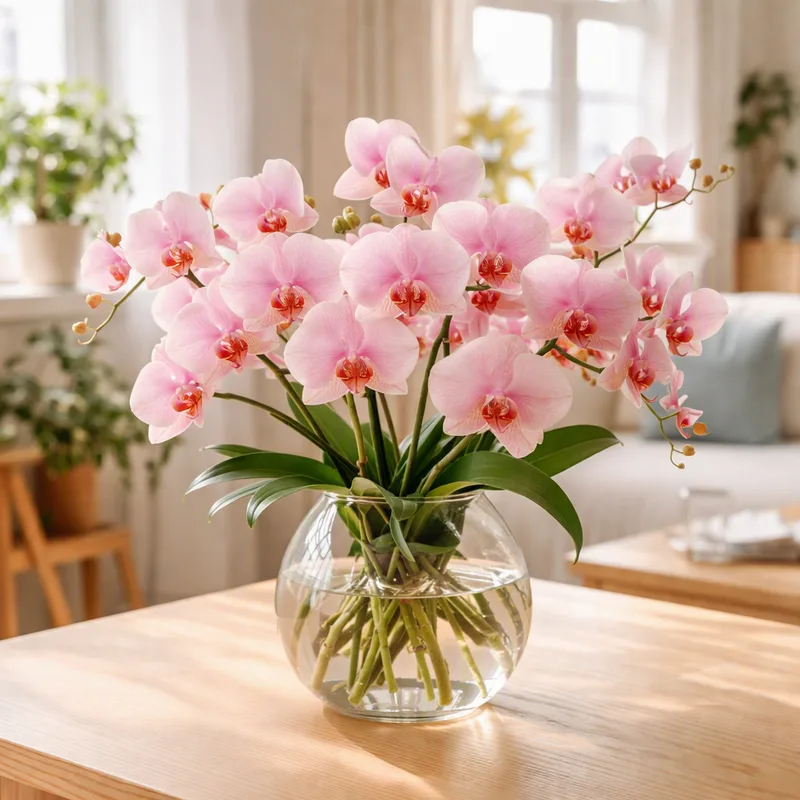
Pink orchids are a familiar present for Mothering Sunday, birthdays and new babies. A potted plant lasts for weeks, and sometimes years, if it is treated well.
Pet safety
Cats and dogs can share a room with this plant, as the ASPCA gives it a non-toxic rating.