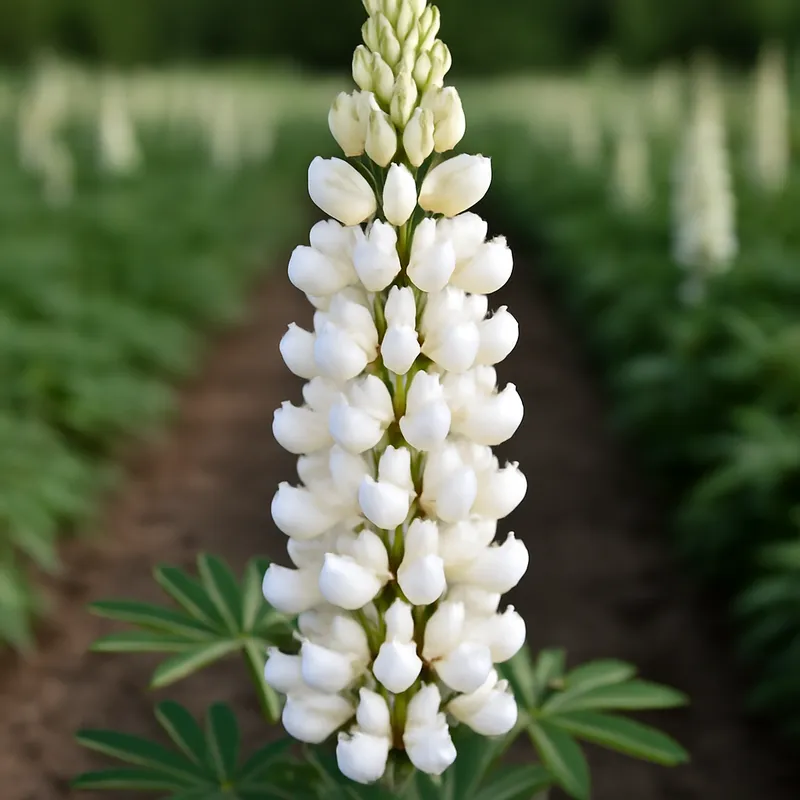
White Lupin (Lupinus polyphyllus)
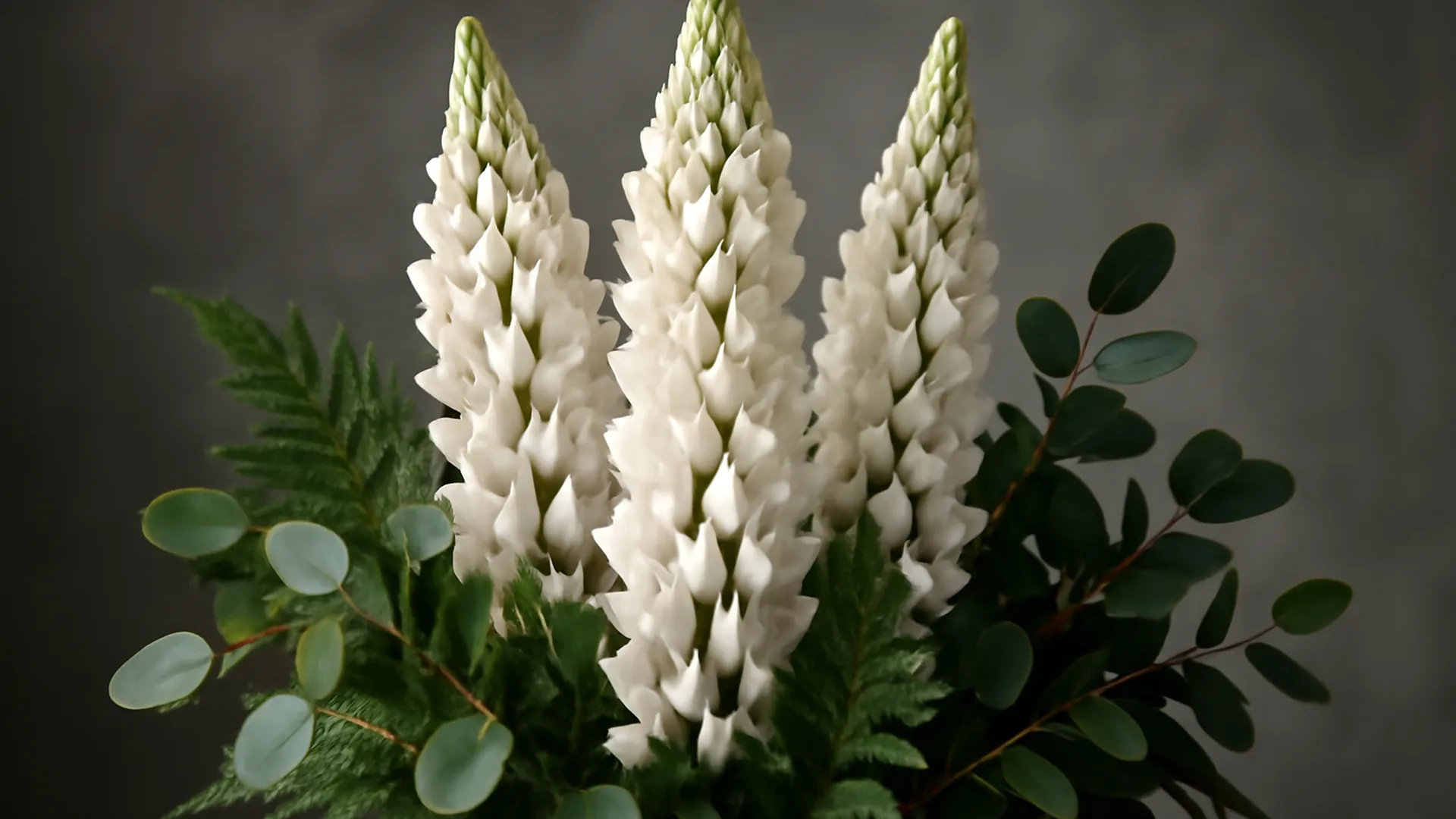
White lupin is one of the garden's most impressive perennials, with its tall, elegant flower spires reaching towards the sky. This cottage-garden favourite has established itself as a classic in British gardens thanks to its robust nature and spectacular flowering.
Stunning flower spikes that impress
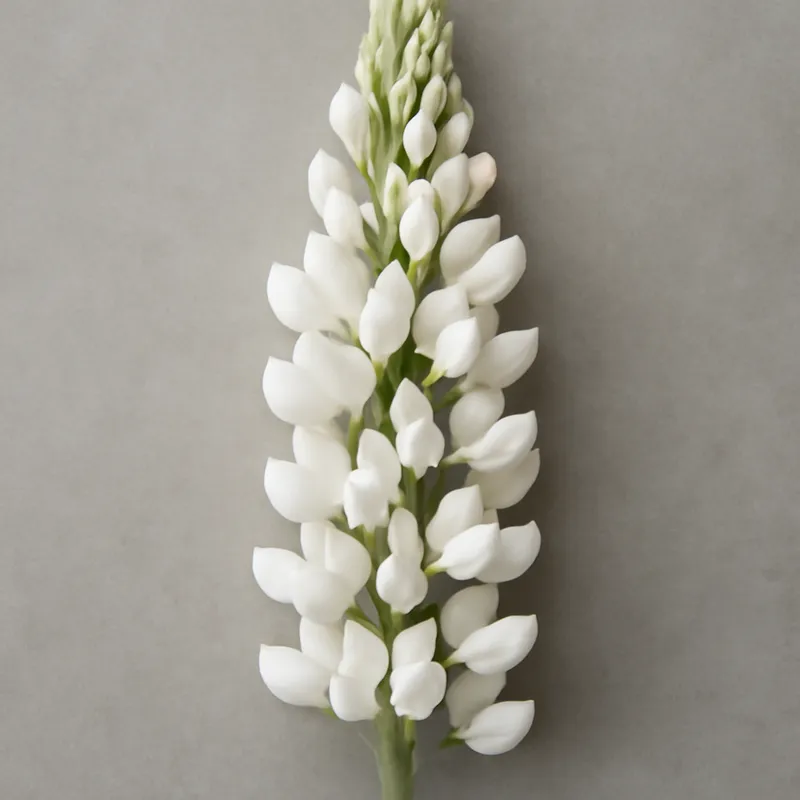
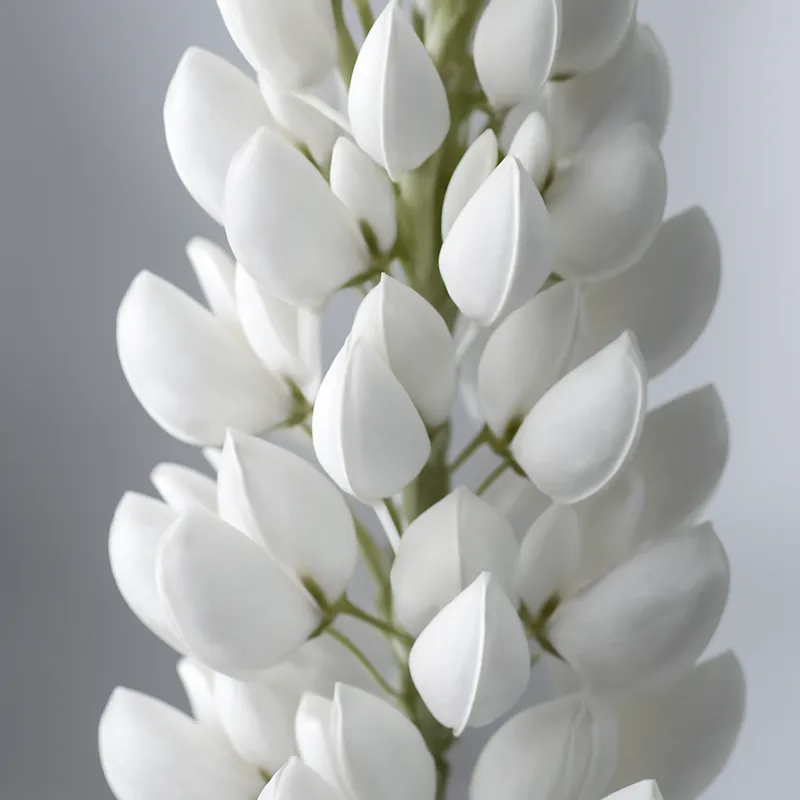
The flower spikes consist of densely packed, pea-like flowers in pure white that create a dramatic effect in the border. Flowering extends from June to August, and with proper care, you can often achieve a second flush of blooms later in the season.
Ideal growing conditions and soil requirements
White lupin thrives best in a sunny to semi-shaded position with well-draining soil. The plant prefers slightly acidic to neutral soil with a pH between 6.0 and 7.0. It's important to remember that lupins are nitrogen-fixing plants that enrich the soil with nutrients through their root nodules, making them excellent companion plants.
Planting and establishment
The best time for planting is early spring or late summer. Plant so that the root collar sits level with the soil surface and maintain a spacing of approximately 40-50 centimetres between plants. Lupins develop deep taproots, which makes them drought-tolerant but also difficult to move once established.
Care during the growing season
During the active growing season, lupin requires regular watering, especially during dry periods. Mulching around the plant helps retain moisture and suppress weeds. To encourage a second flush of flowers, remove spent flower spikes down to the first side shoot.
Overwintering and perennial cultivation
As a perennial, white lupin overwinters outdoors without difficulty in British climates. In autumn, the plant dies back above ground, but the roots survive winter and produce new shoots in spring. The plant can live for many years in the same location and often becomes more beautiful each season as it establishes itself properly.
Garden combinations and design
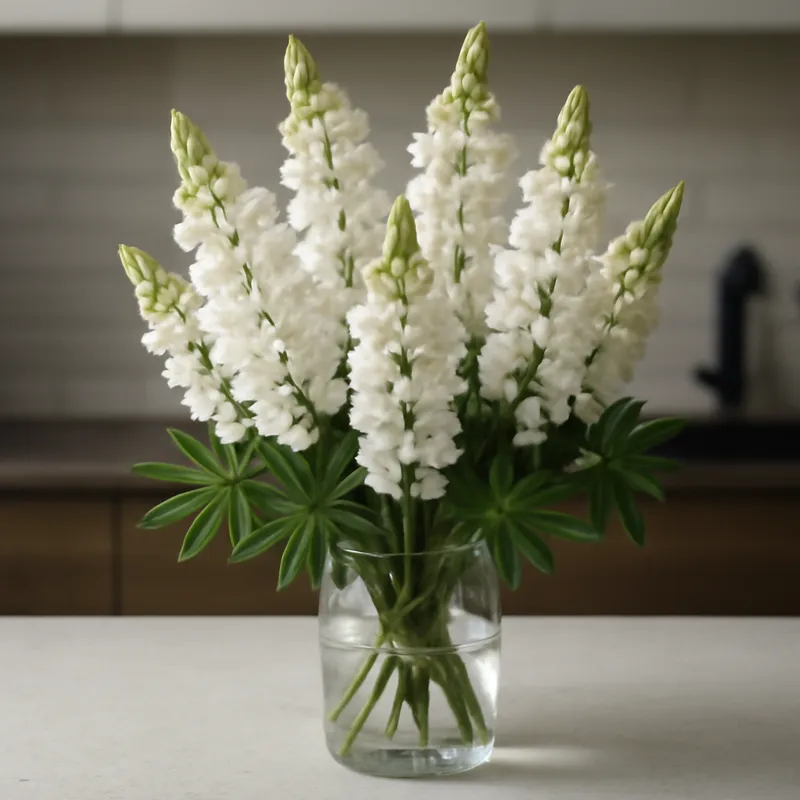
White lupin works excellently as a background plant in the perennial border, where it creates height and structure. It combines beautifully with other classic perennials, and its white colour provides a restful contrast to more brightly coloured plants. The plant is also popular in natural gardens and cottage garden style, where it contributes to a romantic atmosphere.