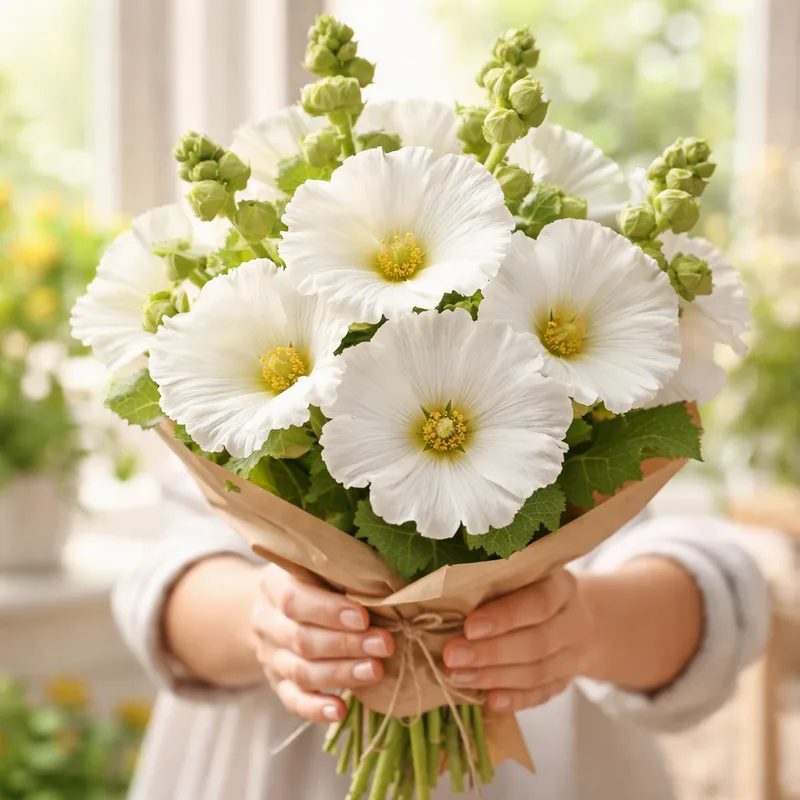
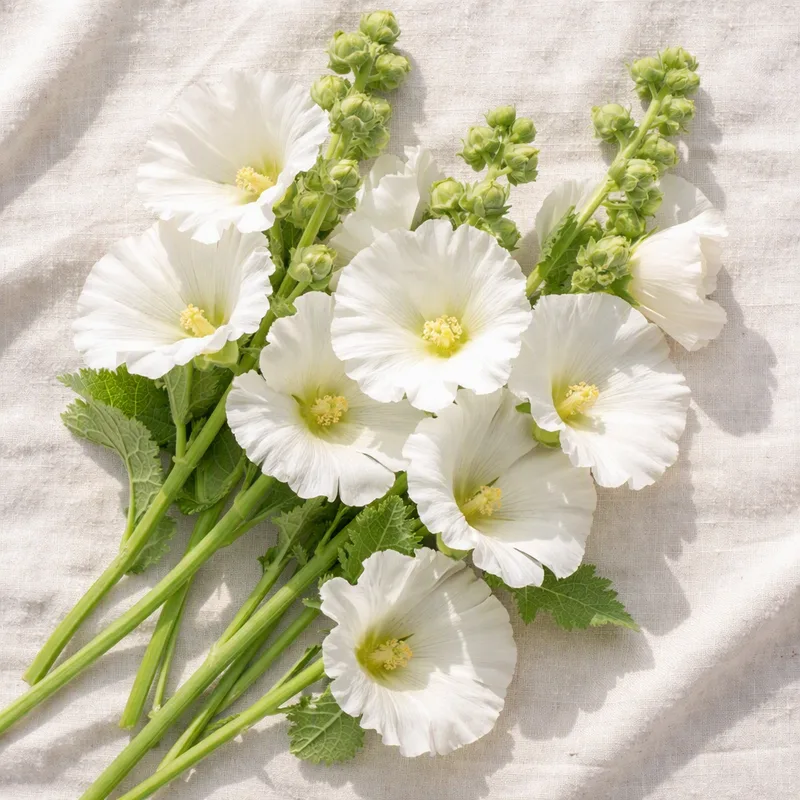
Pale towers for the back of the border
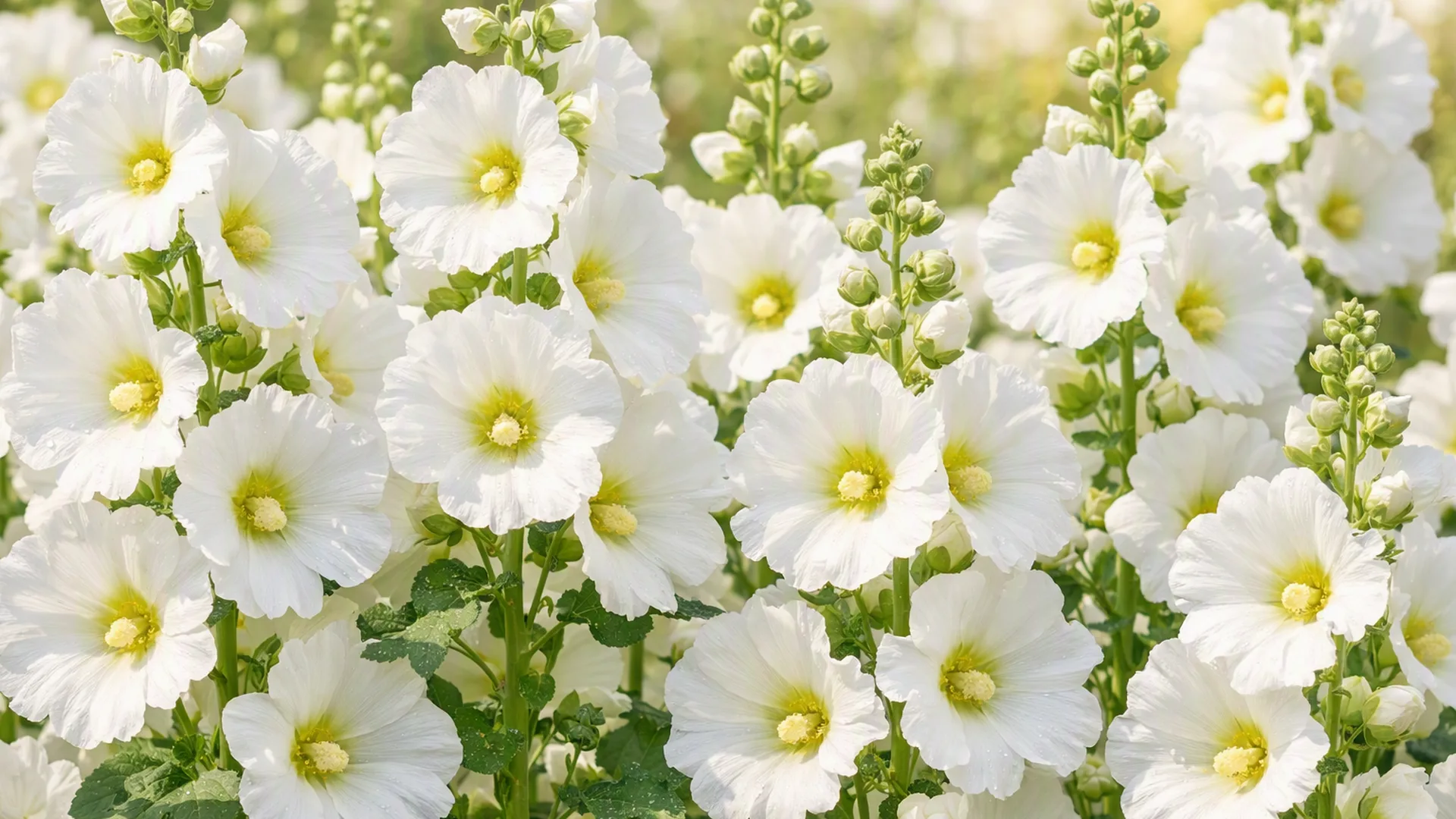
White hollyhocks work like exclamation marks. Tall and slender, they stand behind lower perennials and catch the evening light, which is why they are often used in planting schemes meant to be enjoyed after dusk. They pair easily with deep blue delphiniums, lavender, or the purple haze of alliums that have gone to seed.
Starting from seed
Hollyhock seed is easy and cheap, and the RHS says sowing can be done indoors in April or May, at 16 to 21°C, or straight into the ground in May or June.
- Sow thinly in modules and prick out when seedlings have two true leaves.
- Move young plants to 10 cm pots before planting out.
- Protect seedlings from slugs, which will eat them quickly.
- Keep the top 15 cm of soil damp in the first few months.
Seed from a white parent may not give white flowers, because hollyhocks cross-pollinate readily and self-seeded plants can look different from the parent. If you want white, buy a named white strain and remove any odd colours when they appear.
Single or double
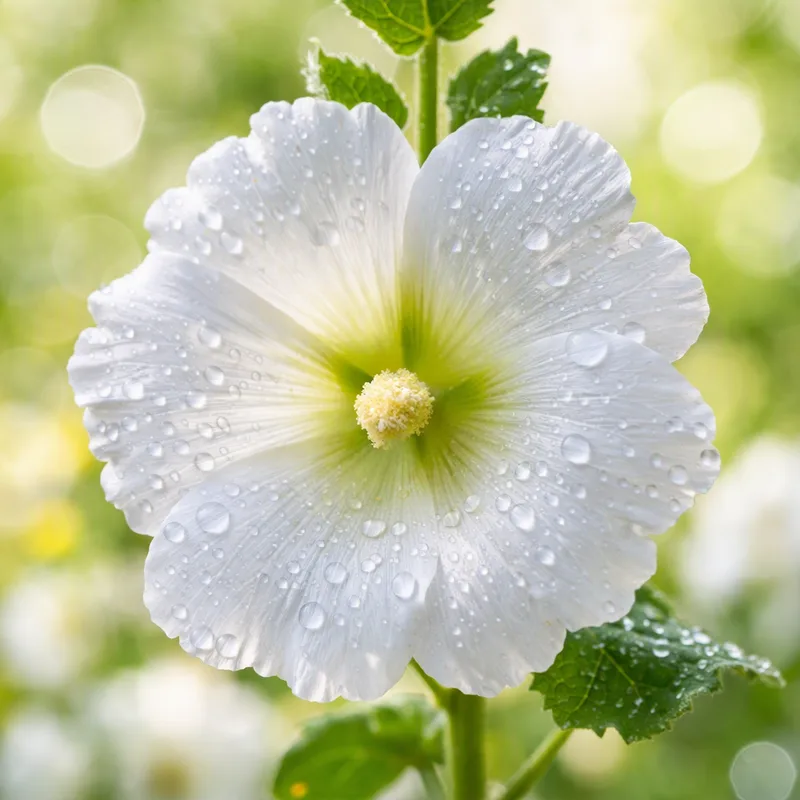
The RHS notes that single flowers are best for pollinators. A white single, with its open cup of petals and central column, is much easier for bees to reach than a ruffled double.
Winter and after
Hollyhocks are fully hardy and need no winter protection. In autumn remove dead leaves and any plant badly hit by rust. They are safe with pets according to the ASPCA, which lists Alcea rosea as non-toxic.