

Three plants, one word
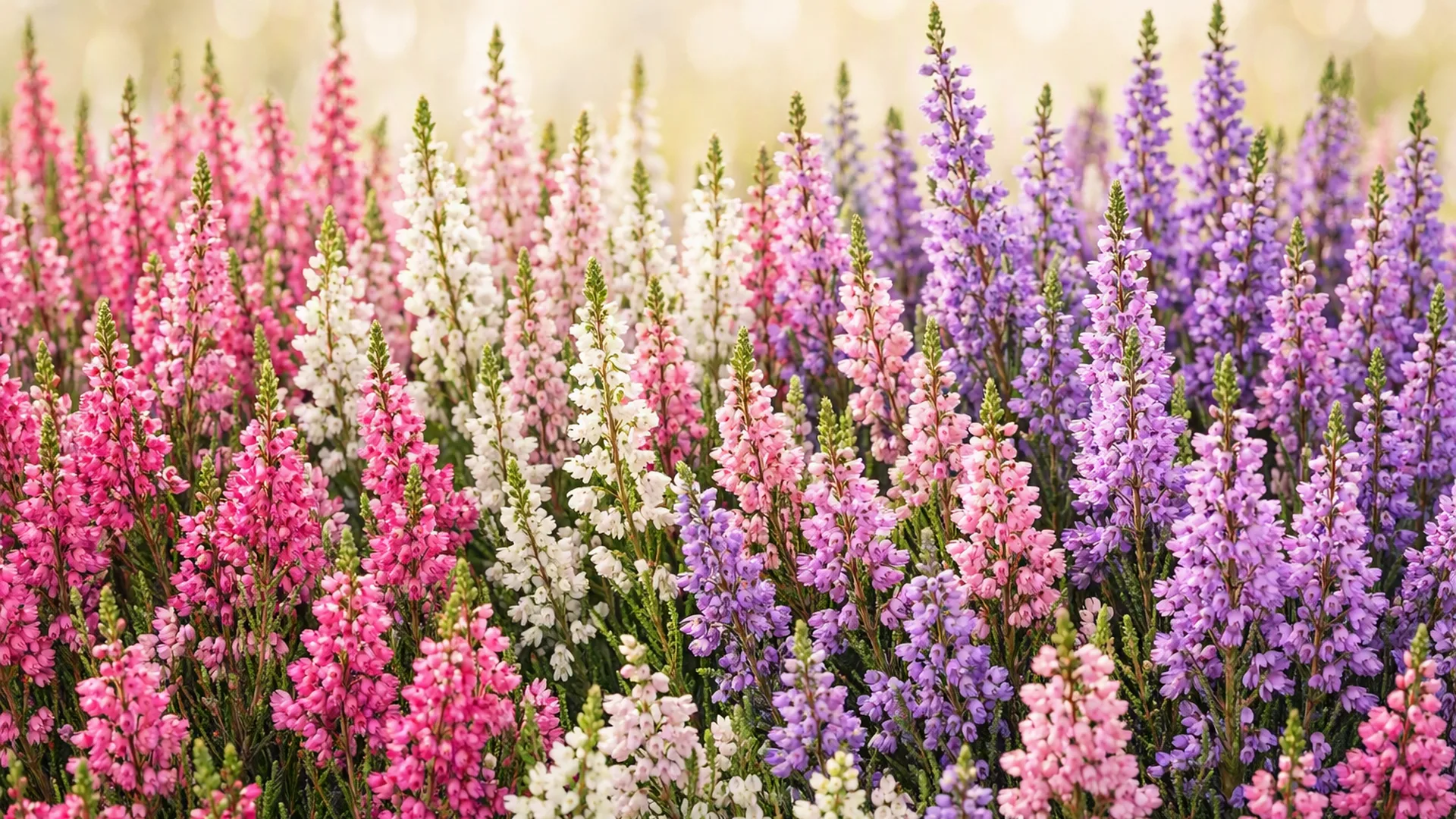
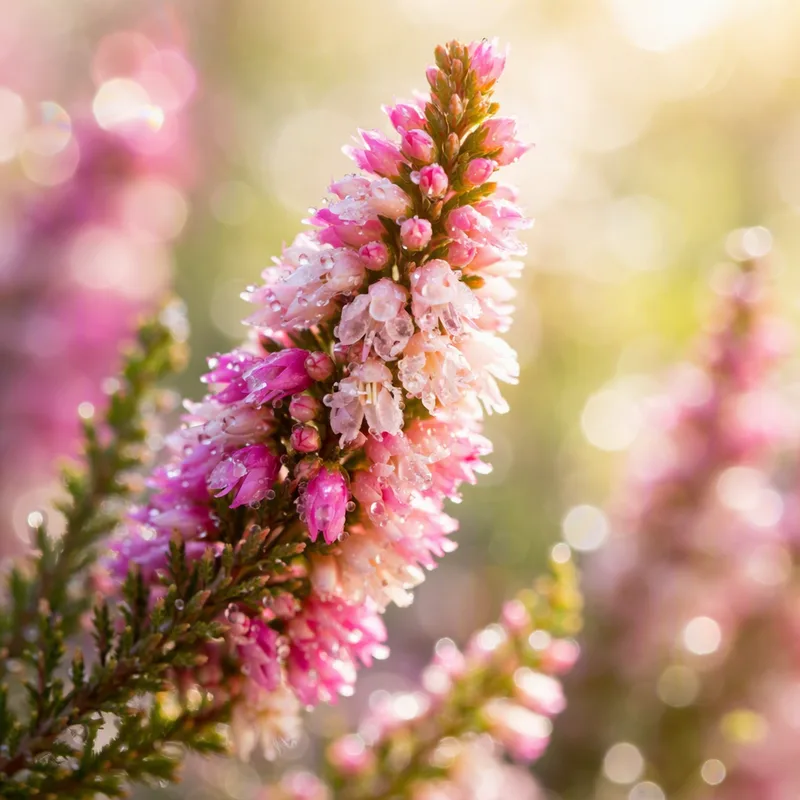
In Britain "heather" usually means one of three native plants. Ling (Calluna vulgaris) is the main moorland shrub, with tiny scale-like leaves and pinkish-purple spikes from August to September. Bell heather (Erica cinerea) has needle-like leaves and deep purple bells from midsummer. Cross-leaved heath (Erica tetralix) grows in boggy peat with pale pink clusters. Garden centres sell all three, plus winter-flowering heaths (Erica carnea) that bloom from December to April.
Moors and heaths
Heather moorland is a distinctive British habitat, and the UK is often said to hold a large share of the world's remaining upland heath. Much of it exists because of long grazing and managed burning, and it supports birds such as red grouse and merlin. The Cornish heath (Erica vagans) is a speciality of the Lizard peninsula in Cornwall.
Growing heather at home
- Most heathers, including Calluna, need acidic soil. In a chalk or limestone garden, grow them in a raised bed or pots of ericaceous compost.
- Winter heath (Erica carnea) tolerates lime better than most.
- Choose a sunny, open spot with good drainage.
- Trim off the faded flower spikes in March or April, cutting just below the old flowers and not into bare wood.
- Mulch with bark or leaf mould and water in dry spells during the first year.
Bud-flowering heathers
Many pot heathers sold in autumn are bud-flowering types, whose flowers stay closed so the colour lasts into winter, which is useful for autumn containers. Those blooms offer no nectar, so choose normal heathers if you want to support bees. Heather honey is a traditional product of Scottish and northern moorland.
Animals
Common heather is not listed on the ASPCA toxic plant lists for cats and dogs, but relatives such as rhododendron are poisonous, so check any mixed autumn planter. Call your vet if your pet has eaten any garden plant and seems unwell.