Which name is right?
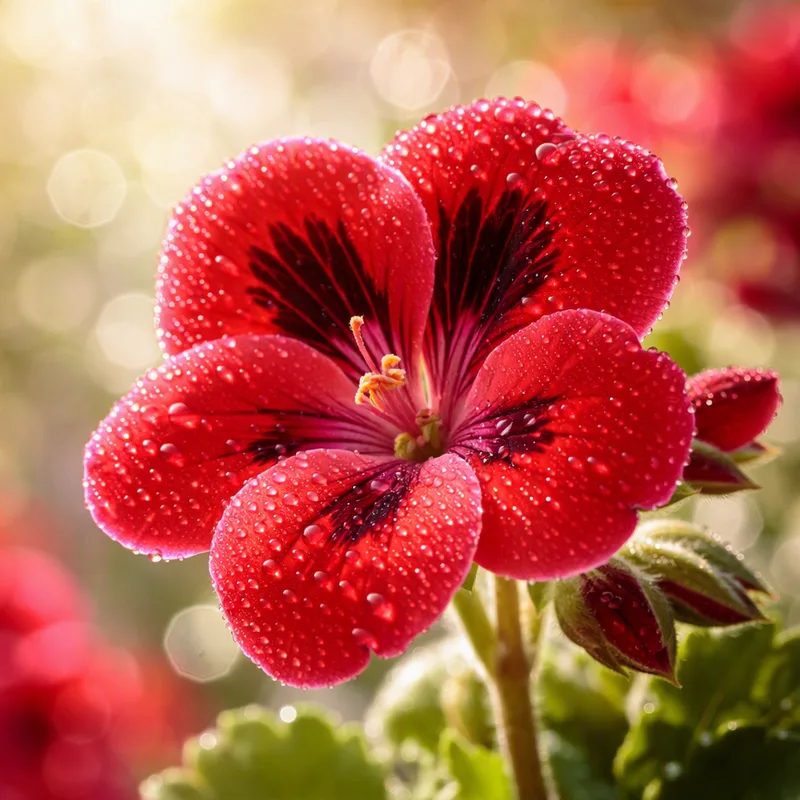
Most people say geranium, but plants in pots and baskets are pelargoniums. The two genera were once lumped together. Dillenius suggested the name Pelargonium in 1732 for a group of South African plants with uneven flowers, though Linnaeus kept them with Geranium in 1753. The difference you can see is in the flower: a pelargonium has one plane of symmetry, with two upper petals unlike the three lower ones, while a true geranium flower is evenly round.
The hardy plants known as cranesbills are Geranium. They come through British winters. Pelargoniums are evergreen perennials from warm regions, particularly southern Africa, and can tolerate only minor frosts.
Groups worth knowing
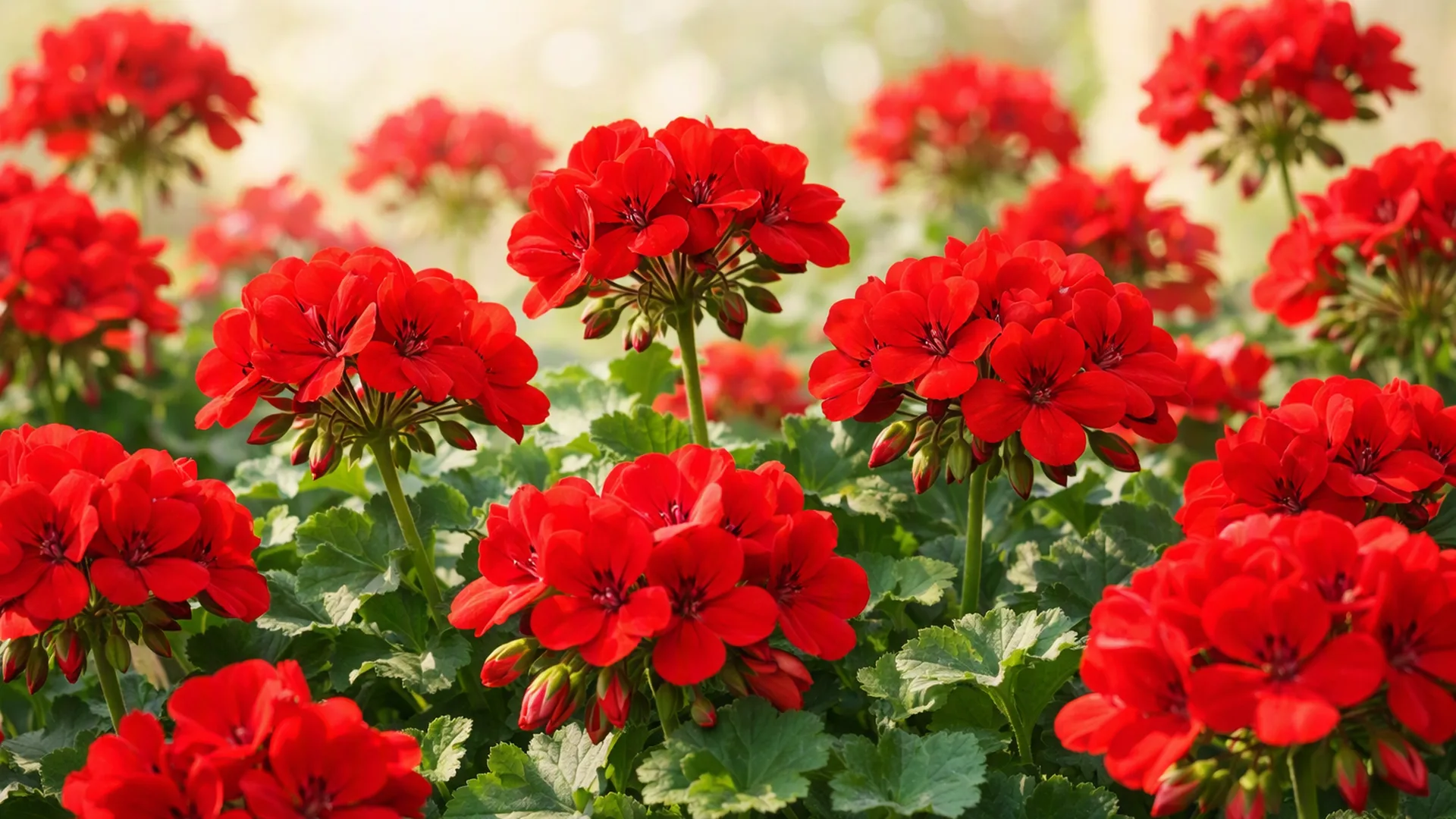
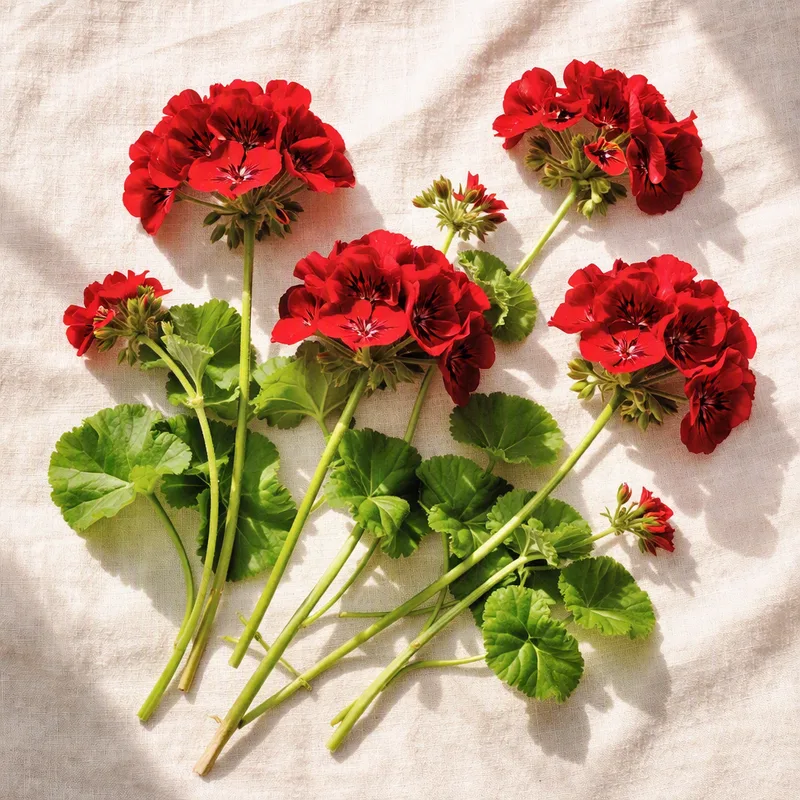
- Zonal pelargoniums, with rounded leaves and a darker band, the usual bedding plant
- Ivy-leaved pelargoniums, trailing and ideal for baskets
- Regal pelargoniums, with showy, large blooms and a shorter season
- Scented-leaved types, grown for fragrant foliage
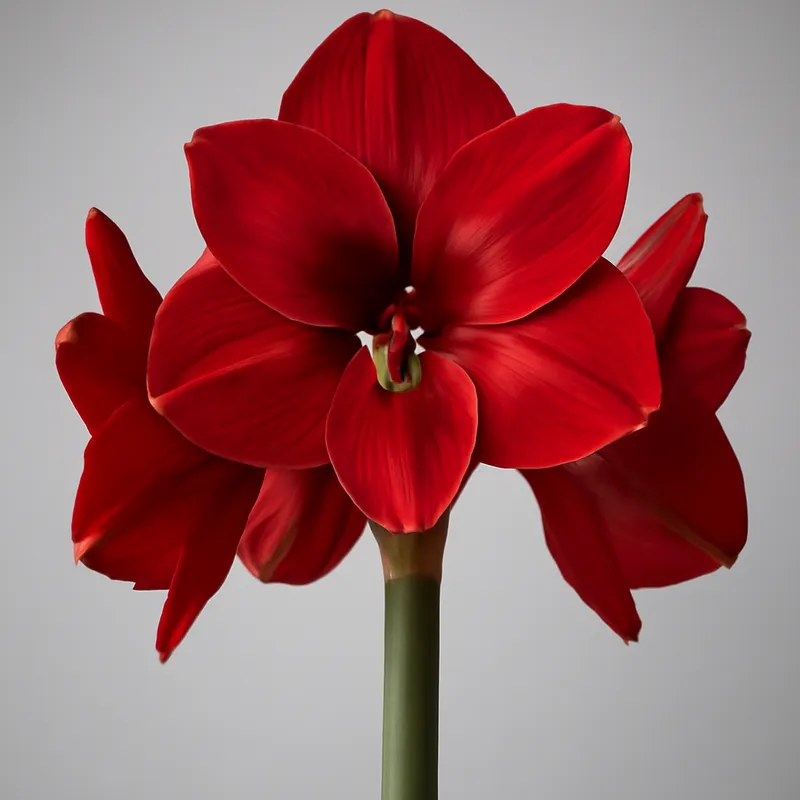
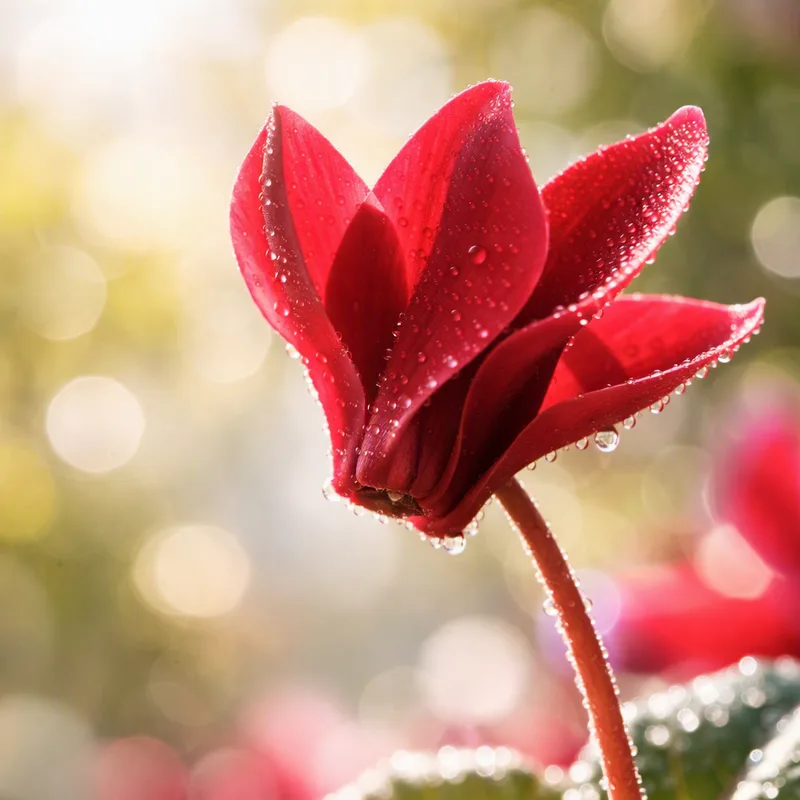
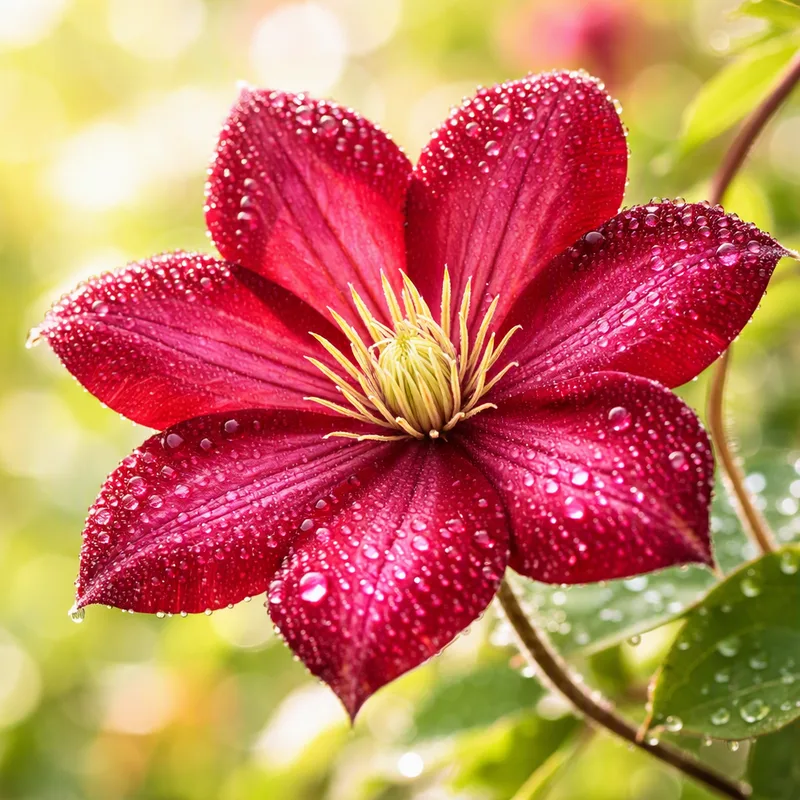
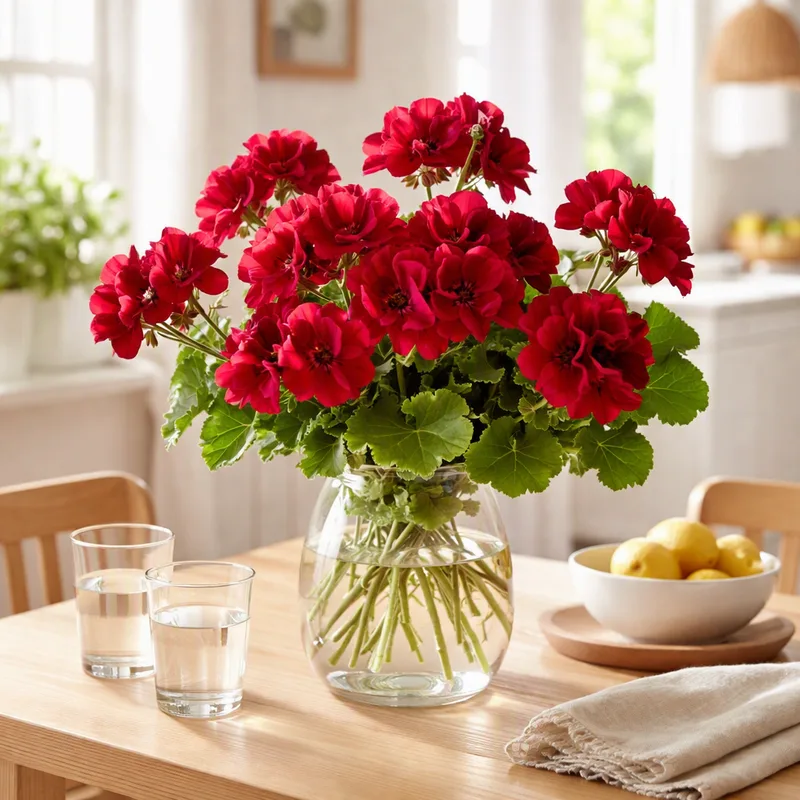
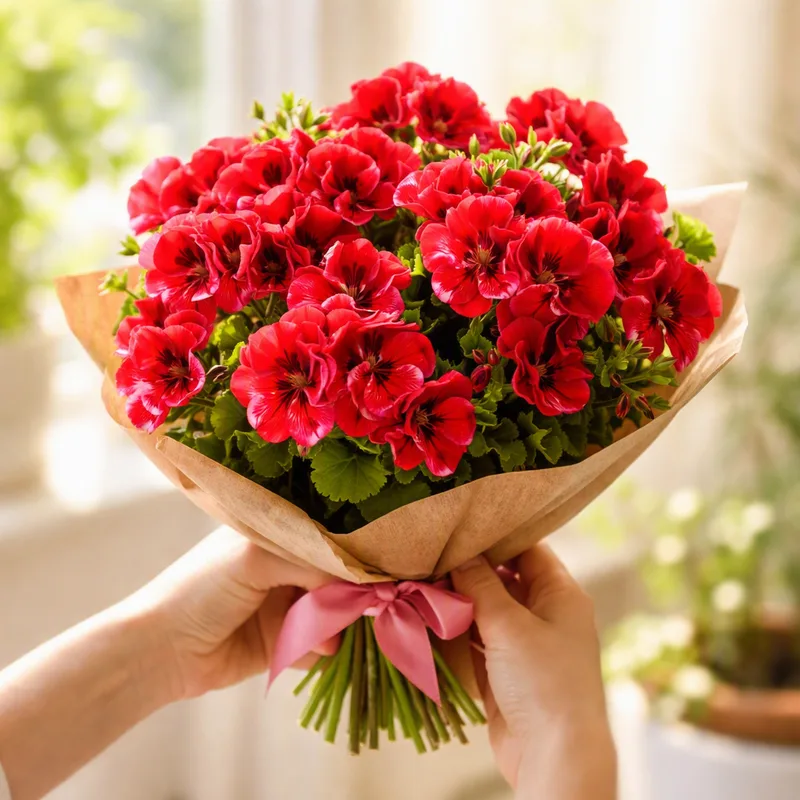
This page shows red, the traditional colour of the popular zonal kinds.
Keeping one going
Put plants outside in late May once frost has gone, or in June in colder parts such as Scotland and the Pennines. Give full sun and let compost dry between waterings. They bloom from May to October with regular removal of faded heads. In autumn, move pots to a bright, cool, frost-free spot and water sparingly, or root cuttings in late summer.
What does pelargonium mean?
Flower-language lists give pelargoniums various meanings, with comfort often mentioned for geraniums, but sources disagree.
A word about pets
Dogs, cats and horses can be made ill by pelargonium, says the ASPCA, which blames the oils geraniol and linalool.