The white blossom
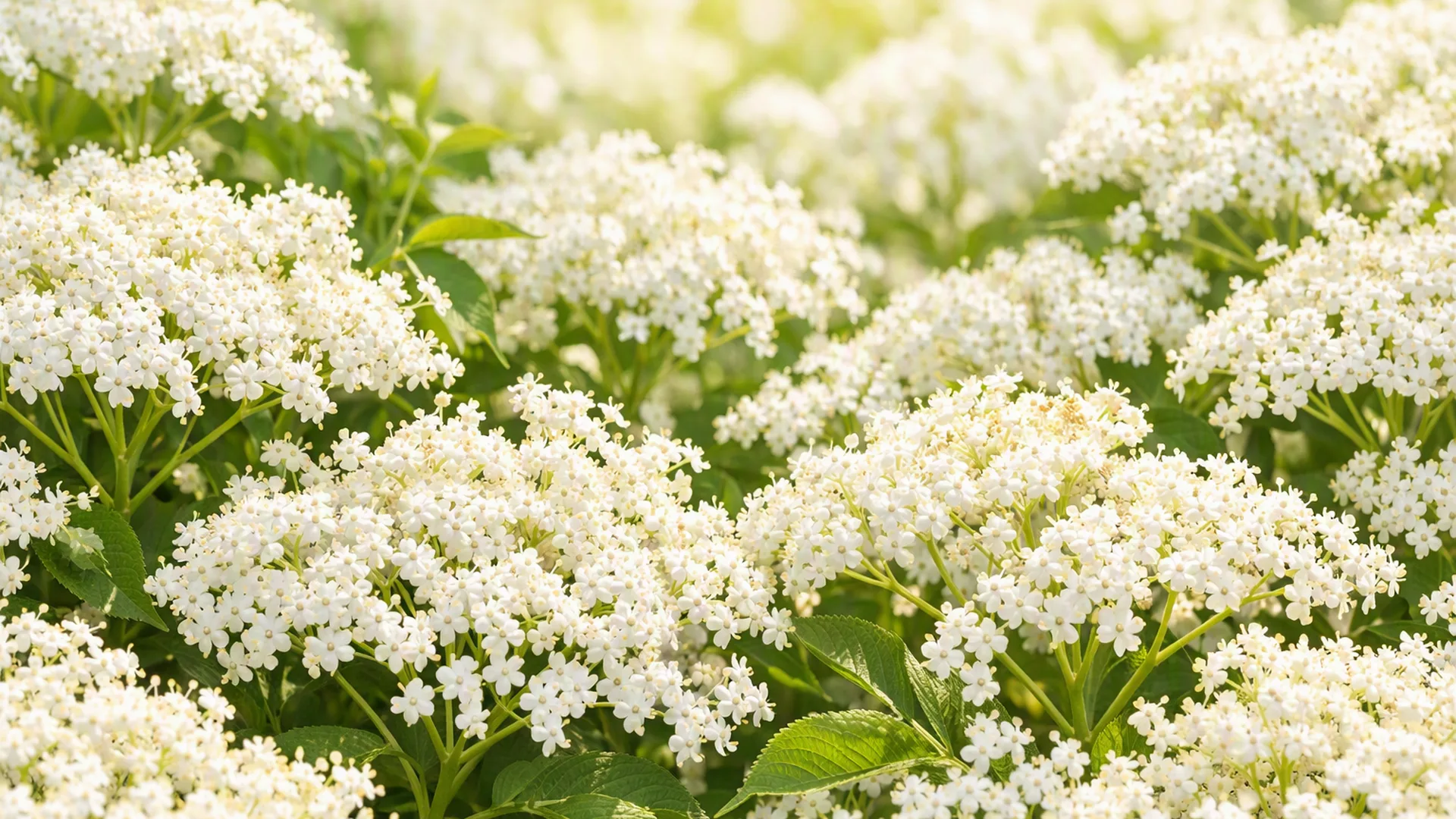
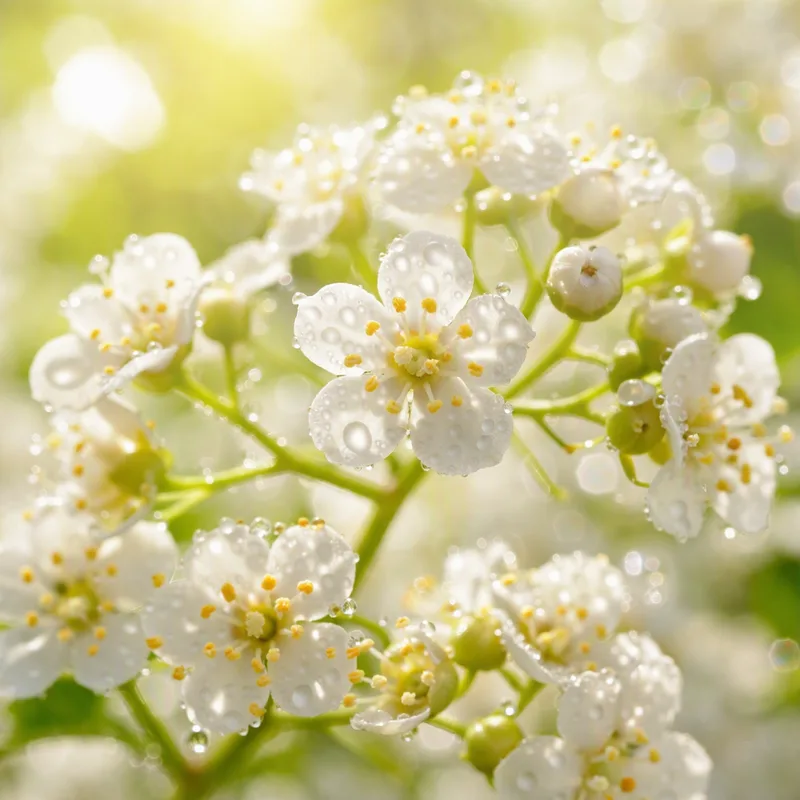
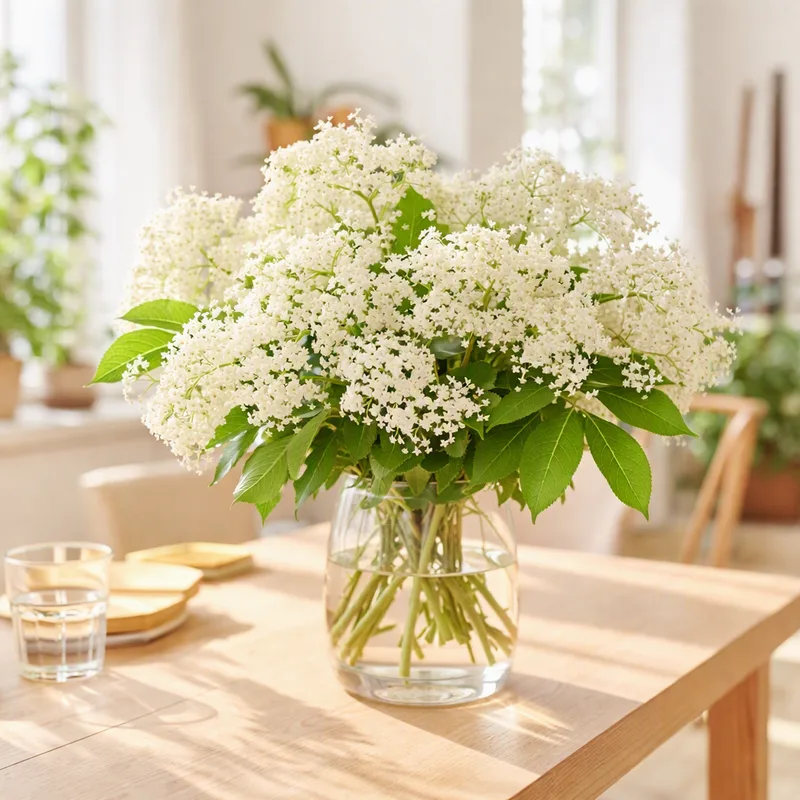
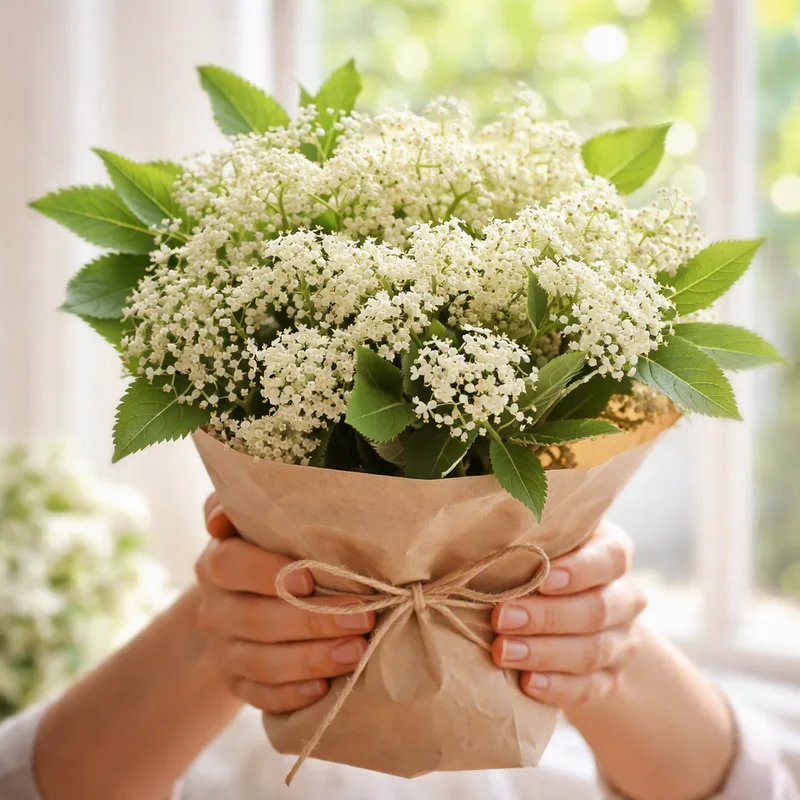
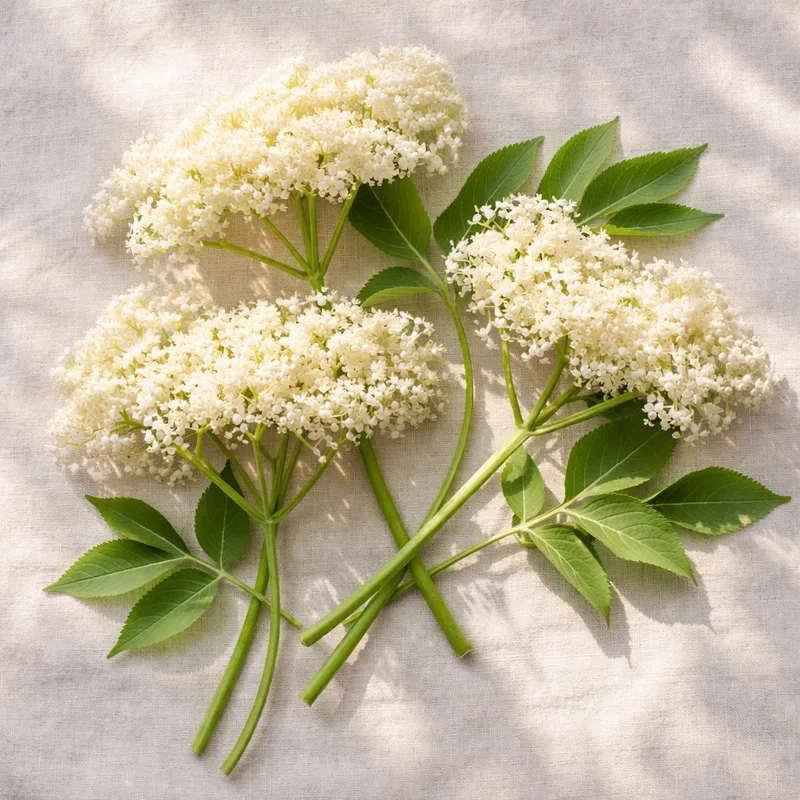
The flowers of Sambucus nigra are small, cream-white and clustered in broad flat umbels, usually flowering from May into July. They have a sweet, musky scent, and bees and hoverflies visit them. The black berries that follow in late summer feed many birds, and Wikipedia records that 22 bird species were observed eating them in one study.
Picking and using
Early summer mornings after a dry spell are the best time to pick. Shake each head gently to remove insects, trim off the thicker stalks, and use the flowers soon after cutting. Cordial, champagne-style drinks and tea are the traditional uses.
Wikipedia states that there is no medical evidence that elder products provide any health benefit, so enjoy the flavour without expecting a cure.
Good foraging practice
- Pick away from road verges and sprayed crop edges.
- Never take every flower head from one bush.
- Do not uproot any wild plant; if you want elder in the garden, buy a nursery shrub.
- If you are unsure of identification, leave it.
As a cut flower
Elderflower sprays wilt quickly in a vase. Plunge the stems into water immediately after cutting and expect them to last a day or two.
In some years cool weather pushes the main flush into June, so check local hedges before planning a cordial-making weekend. Heads are ready when the tiny buds on the umbel have all opened and the scent is strong.
Elder and your health
All parts apart from the ripe berry flesh contain sambunigrin and are poisonous to mammals. Cook the berries and avoid leaves, bark and unripe fruit. Elderberry is on the ASPCA's toxic plants list for dogs, cats and horses.