Where the name comes from
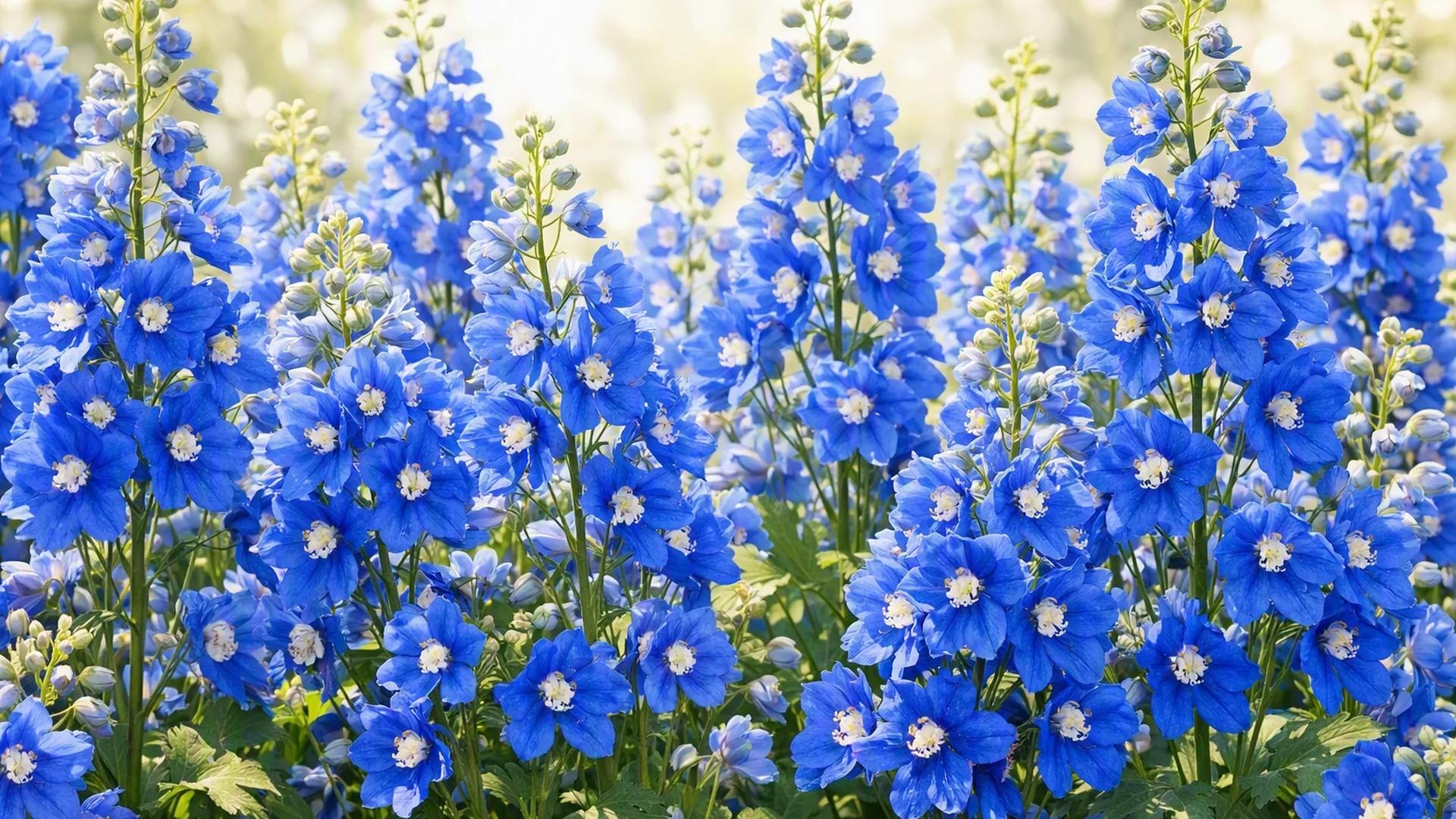
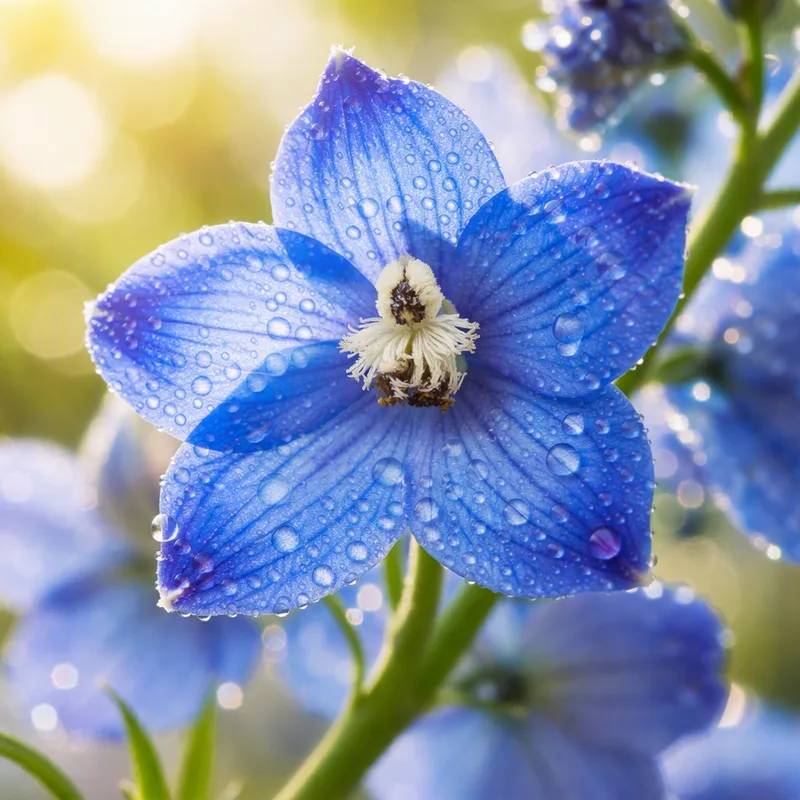
Delphinium comes from the Greek word for dolphin, because the bud was thought to resemble one. What look like petals are in fact coloured sepals, and the top one forms the hollow spur that gives related plants the name larkspur. The classic garden delphiniums are hybrids, many descended from Delphinium elatum.
A fixture of the British border
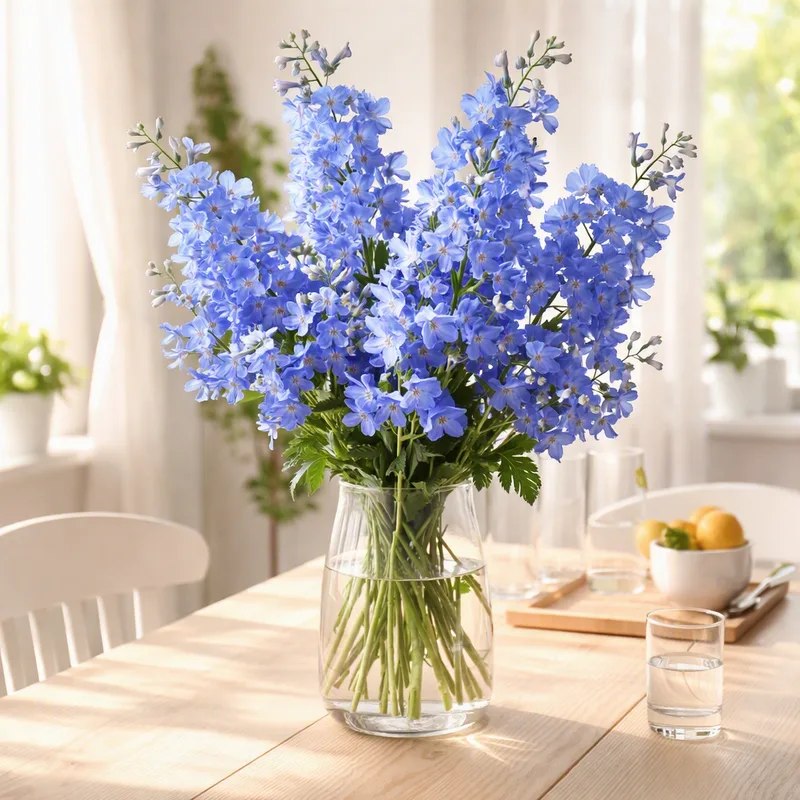
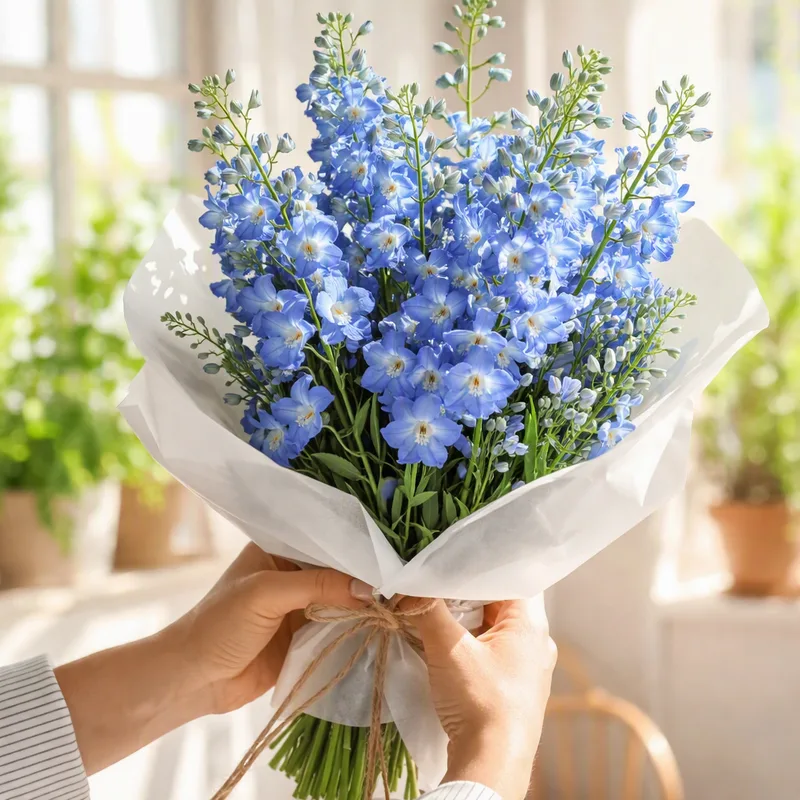
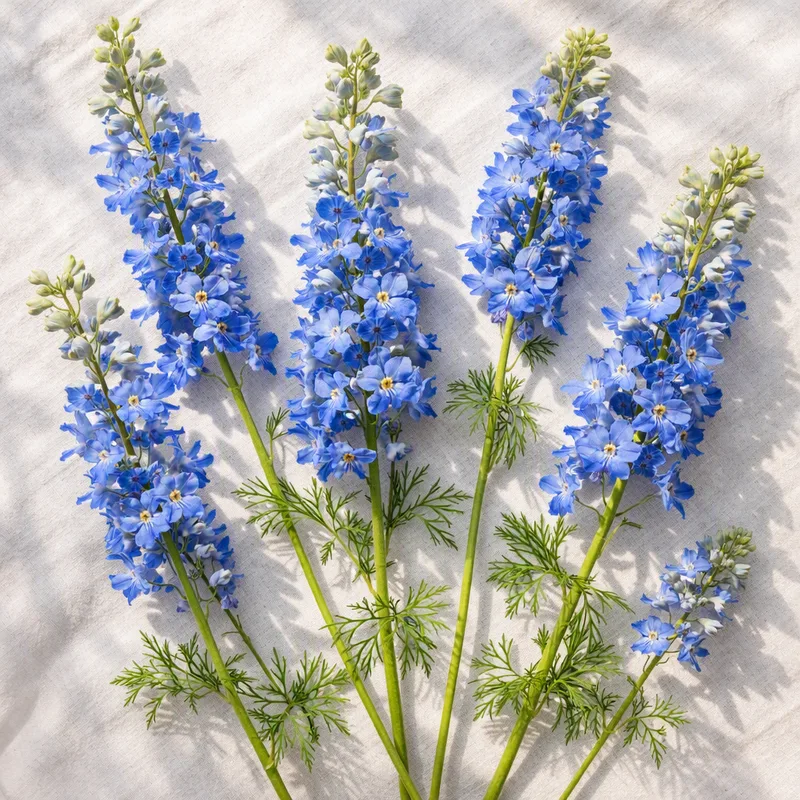
Delphiniums peak in June and July and are closely tied to the cottage garden and to the show benches of the Chelsea Flower Show. Tall Pacific Hybrids reach 1.5 metres or more. The Belladonna group is shorter, with branching, airier stems and better wind tolerance, so it is an easier choice for exposed gardens.
Keeping them standing
- Plant in full sun in fertile, well-drained soil enriched with compost.
- Stake early, ideally before the stems reach half height, because wind and heavy rain snap them.
- Protect new spring shoots from slugs and snails, which find them irresistible.
- Cut spent spikes down to the base after flowering and feed, and you may get a second, smaller display in late summer.
Hazards to know about
Delphiniums contain alkaloids that harm people, and the ASPCA warns that they are poisonous to dogs, cats and horses as well. Wear gloves when handling stems, wash your hands, and keep children and animals away. If someone has swallowed any part, call NHS 111 or, for an animal, contact your vet or the Animal PoisonLine straight away.
For a safer vase or border choice, consider snapdragons or foxgloves in a similar tall, spiky form, though foxgloves are poisonous as well.