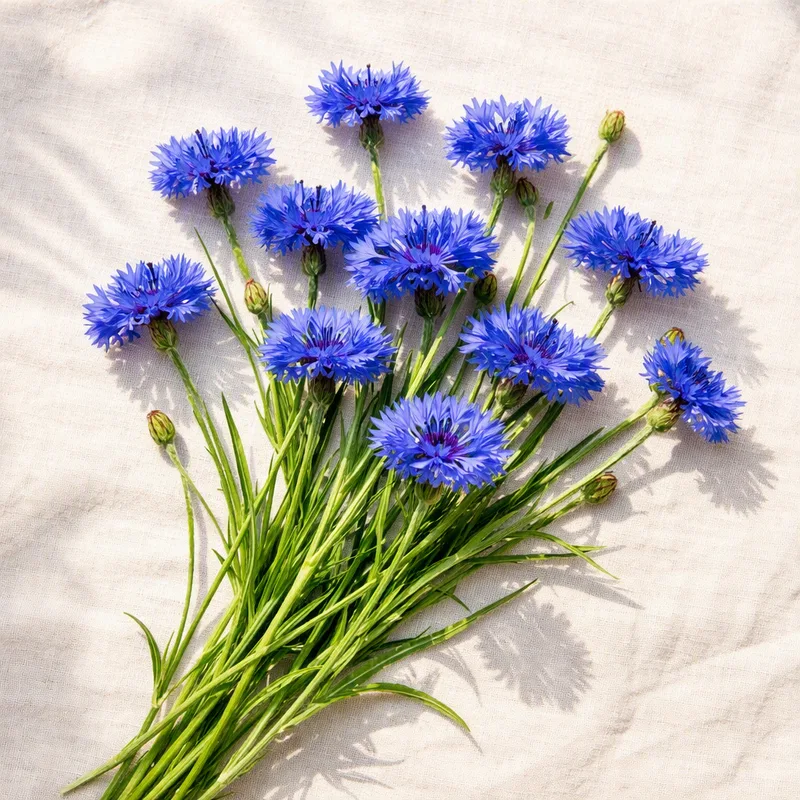
The blue that gave a colour its name
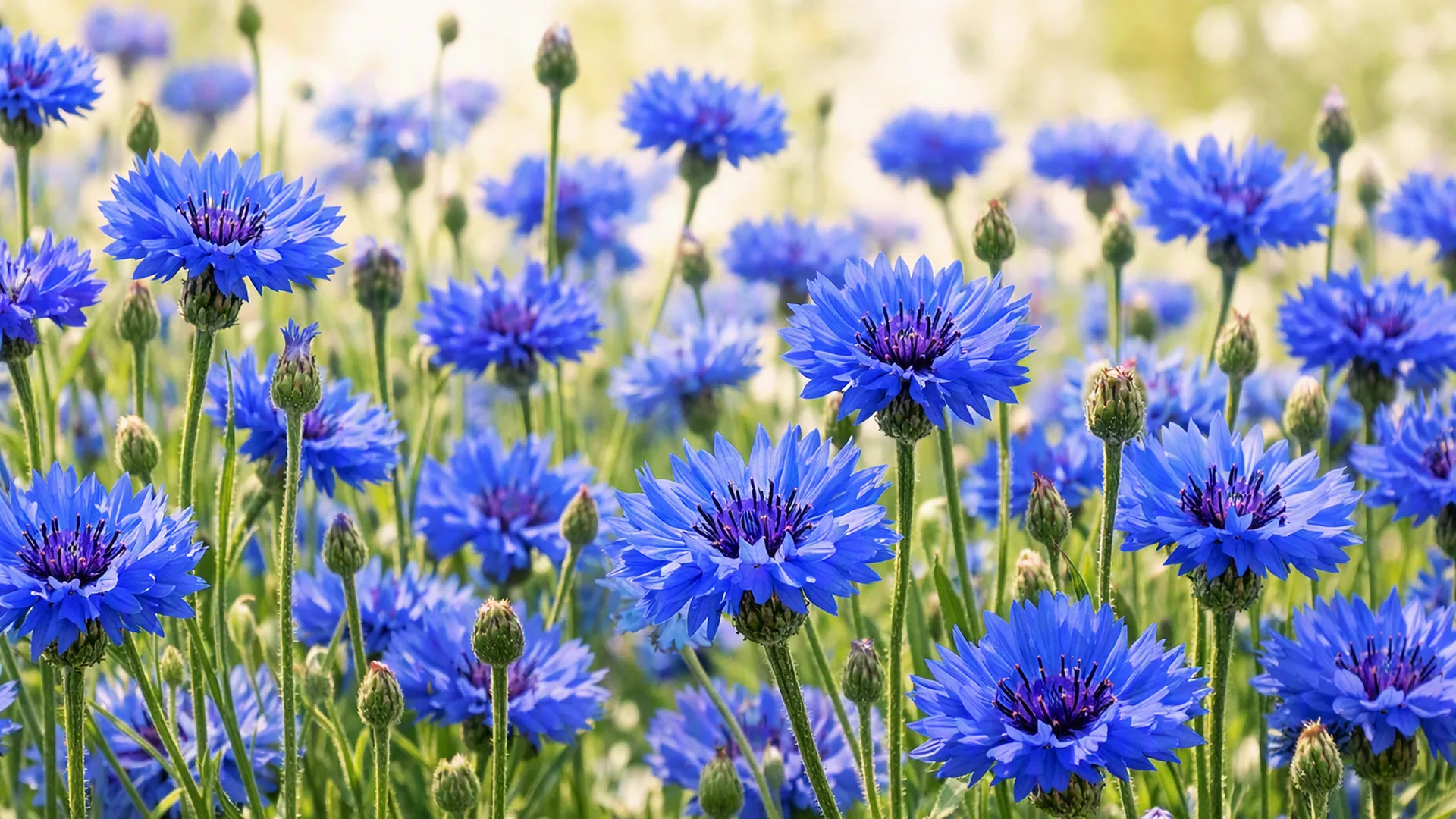
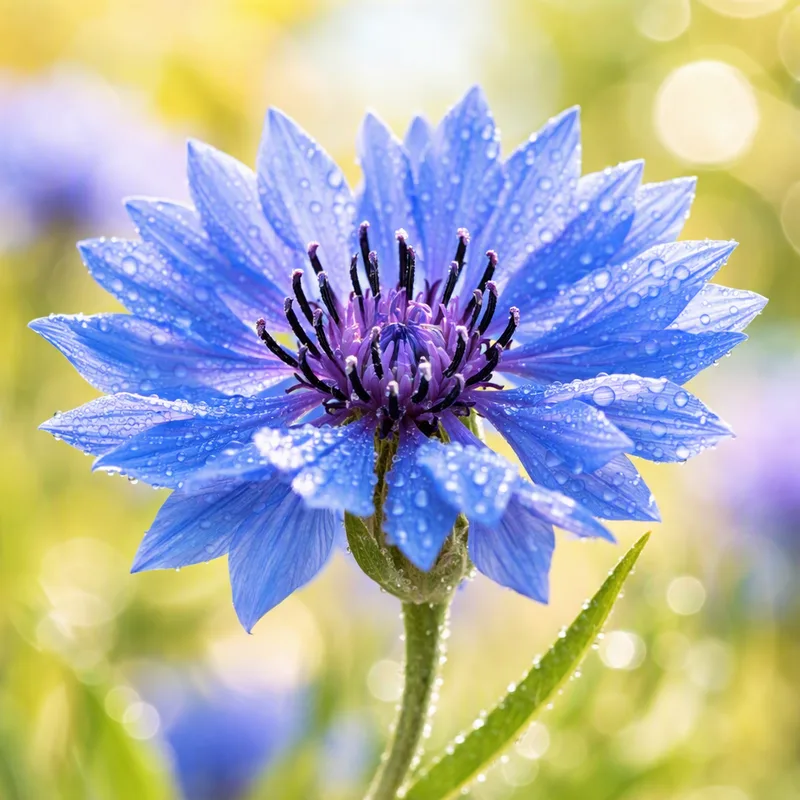
Cornflower (Centaurea cyanus) is a hardy annual that grows 40 to 90 cm tall, with narrow grey-green leaves and tufted flowers of intense blue. The "what colour is cornflower" question has a neat answer: a clear, medium blue, and the shade "cornflower blue" is named after it. Some wild plants lean violet, while garden varieties offer white, pink and almost black-maroon.
A lost cornfield flower
For centuries cornflower grew among wheat and barley as an arable weed, which is how it earned its name, since "corn" in older British usage means grain. Modern seed cleaning and herbicides made it far less common, and Plantlife includes cornfield annuals among Britain's most threatened wild plants. Nowadays most cornflowers you see by a road are escapees from sown wildflower mixes.
What it means
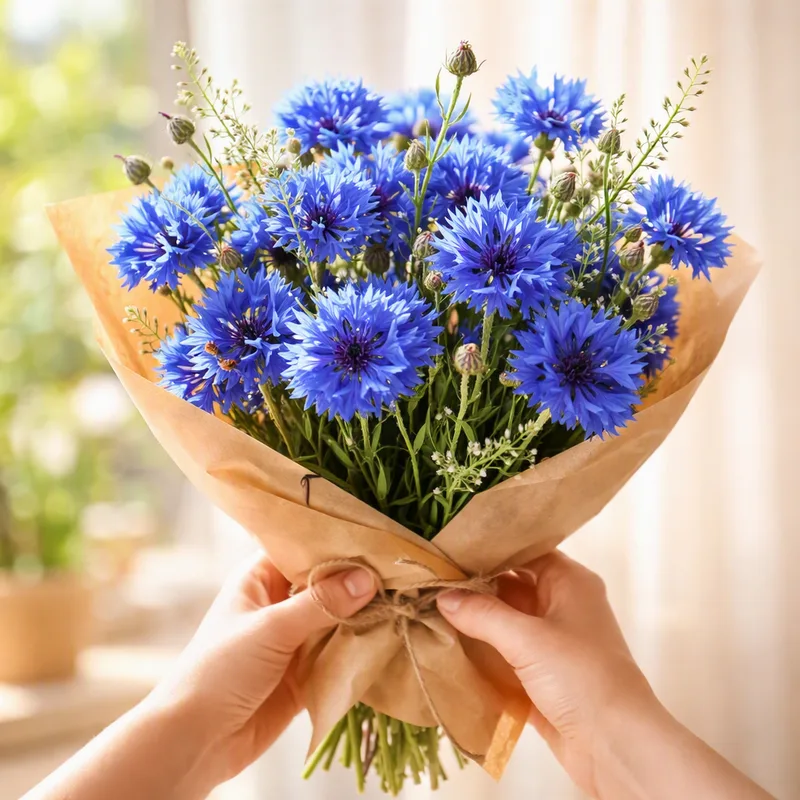
Traditional names include bachelor's buttons, from the habit of young men wearing a sprig in the buttonhole. In the language of flowers cornflower is linked with delicacy and hope. In France the bleuet de France is a symbol of remembrance, worn on Armistice Day alongside the British poppy, and Estonia has made it a national flower.
Sowing and growing
- Sow seed where the plants are to flower, from March to May or in September.
- Choose a sunny site with free-draining soil; thin soil gives sturdier plants, and rich soil gives floppy stems.
- Thin seedlings to about 15 to 20 cm apart.
- Deadhead for weeks of extra blooms, or leave the seedheads for goldfinches.
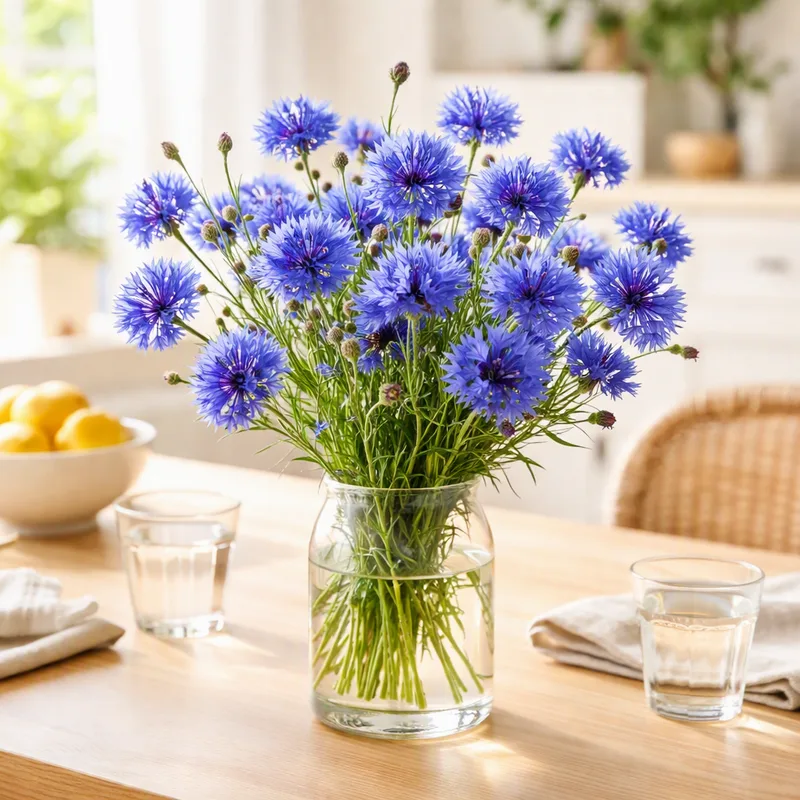
- Cut stems when the first flowers open for a longer vase life of about a week.
Cornflowers are loved by bees, hoverflies and butterflies, and they are an excellent choice for a meadow patch or the edge of a vegetable bed.
Pets
Cats, dogs and horses are not at risk from this plant according to the ASPCA, which lists Centaurea cyanus as non-toxic.