Natural and tinted pinks
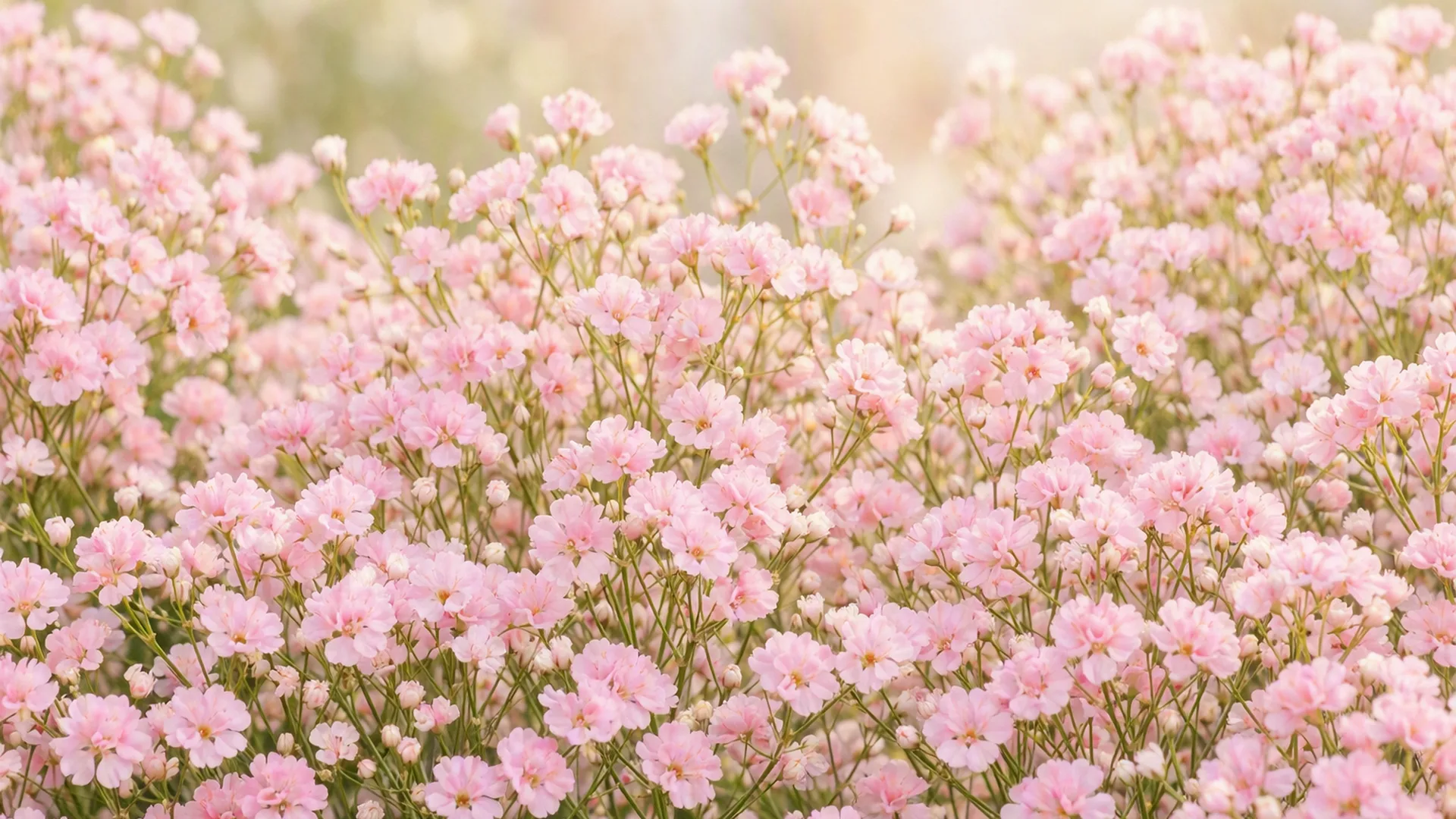
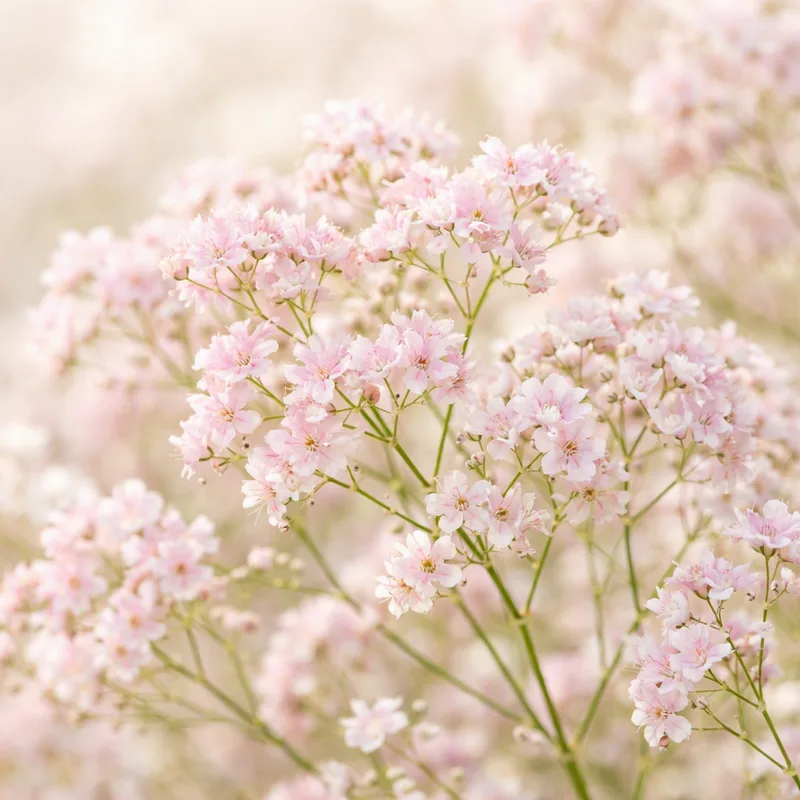
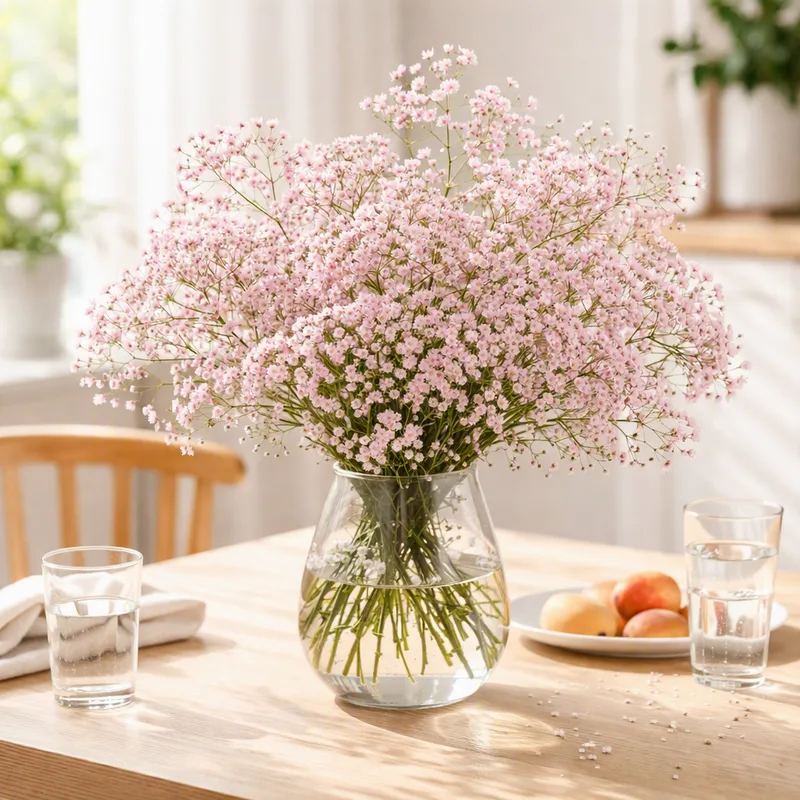
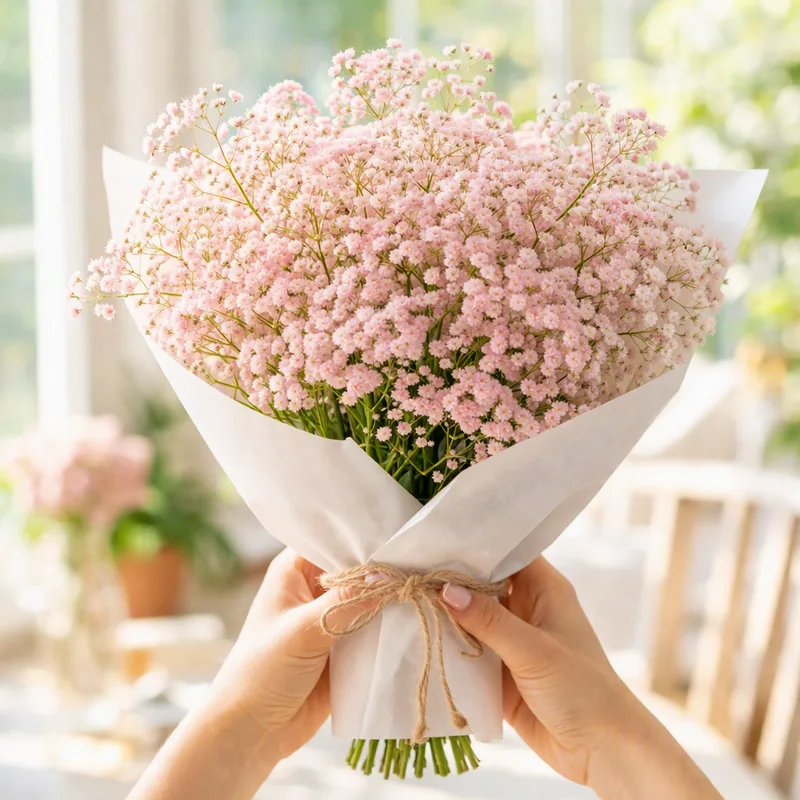
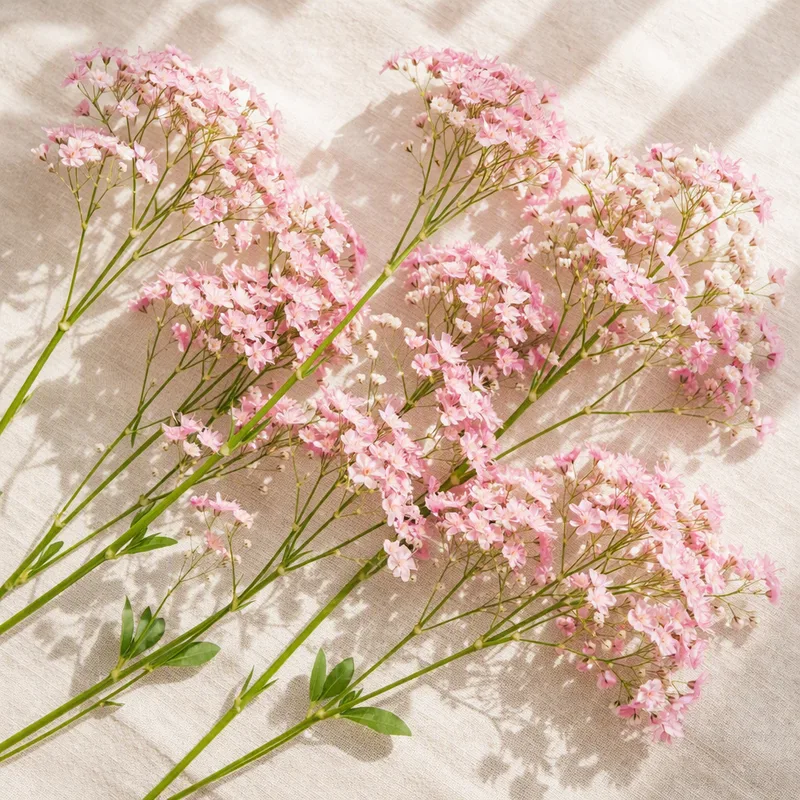
The wild baby's breath is white. Genuinely pink Gypsophila comes from selected garden forms, such as the pale pink, double-flowered 'Rosenschleier', which holds the RHS Award of Garden Merit. Some of the pink stems sold for floristry are white stems that have been tinted after cutting, which explains why the colour can look very even and strong. If you want a natural flush, look for named garden varieties.
Annual pink gypsophila
There is another route to pink in the garden. A different species, Gypsophila elegans, is a hardy annual that can be sown in spring directly into the ground and flowers in white or pink in a few weeks. It is easy for children and quick to produce a harvest of stems to dry.
Meaning and occasions
Searches for baby's breath meaning are frequent. Traditionally the flower stands for innocence, purity and lasting affection, and the pink variety adds a gentler, more affectionate note. That makes it a pretty choice for baby showers, christenings and Mothering Sunday posies.
Keeping the colour
- Avoid long exposure to strong sunlight, which fades pink flowers.
- Dry bunches in a dark place and they will keep a muted rose shade.
- Hang dried bunches away from radiators, where heat makes the stems brittle.
Health and pets
Gypsophila paniculata can cause contact dermatitis, so gloves are a good idea. The ASPCA lists Gypsophila elegans as non-toxic to dogs, cats and horses, with a note about mild stomach upset if chewed.