The original colour
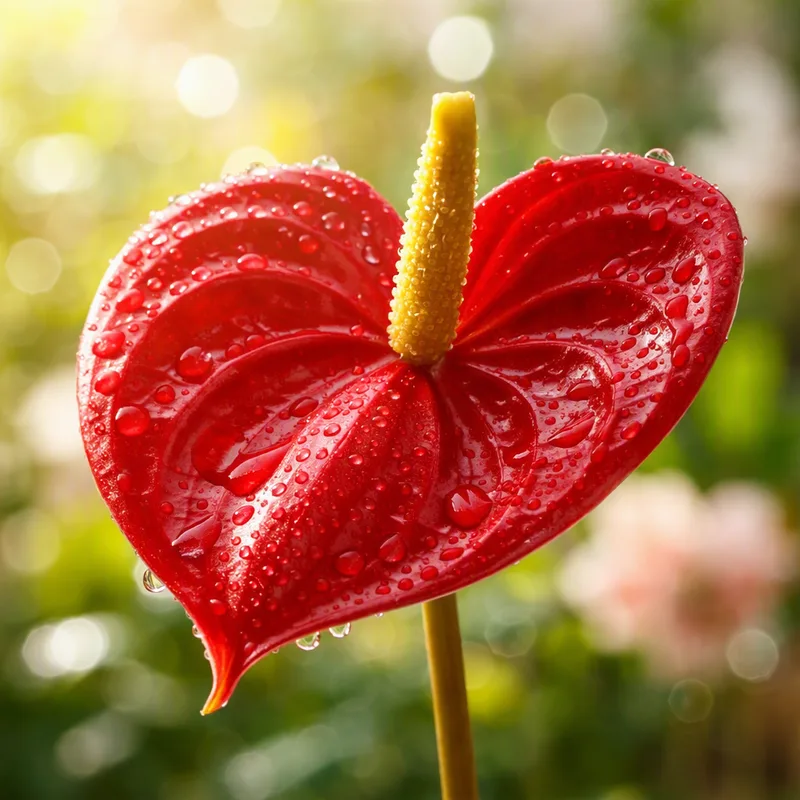
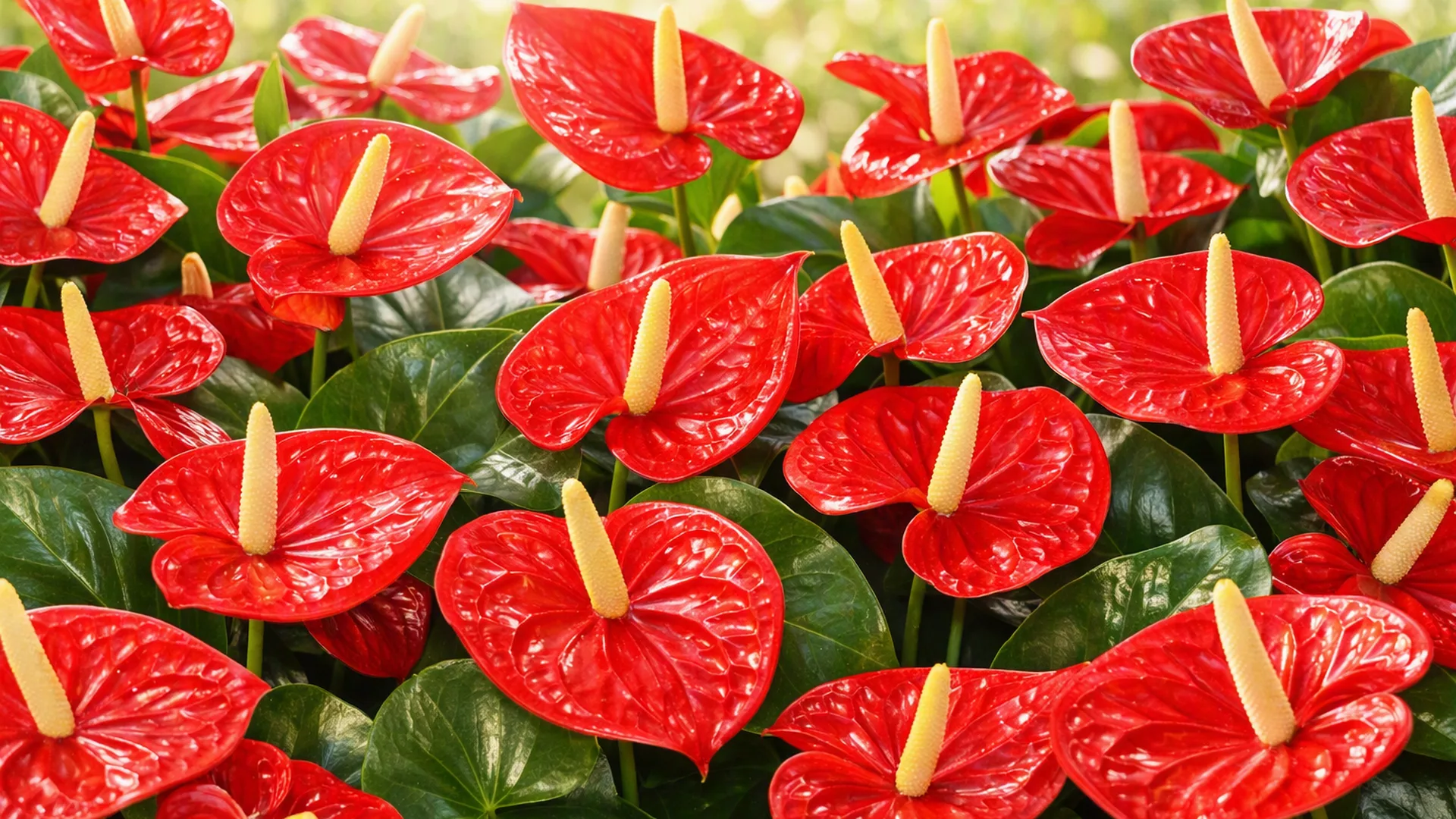
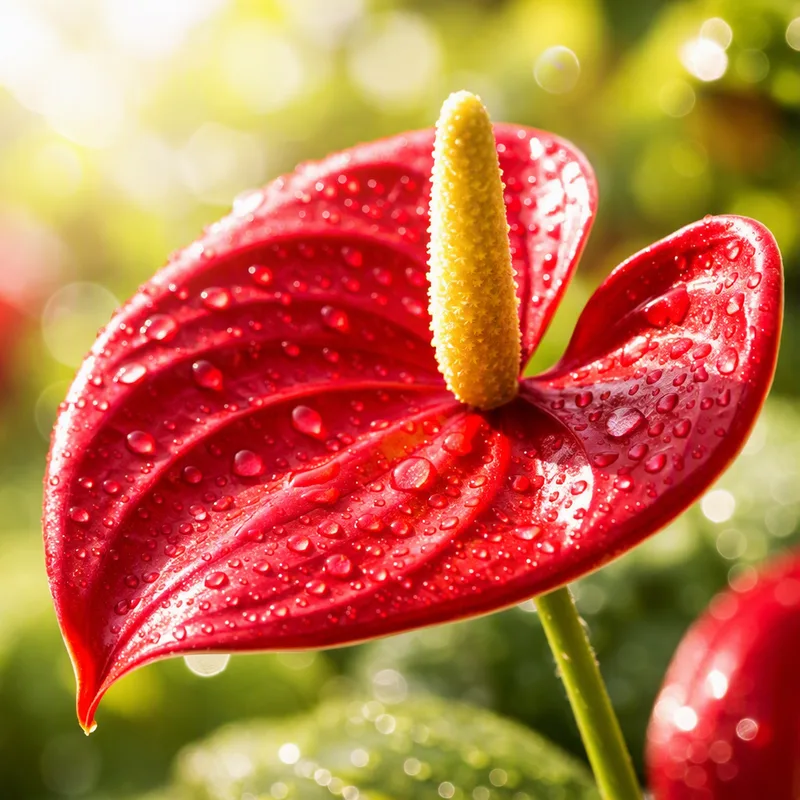
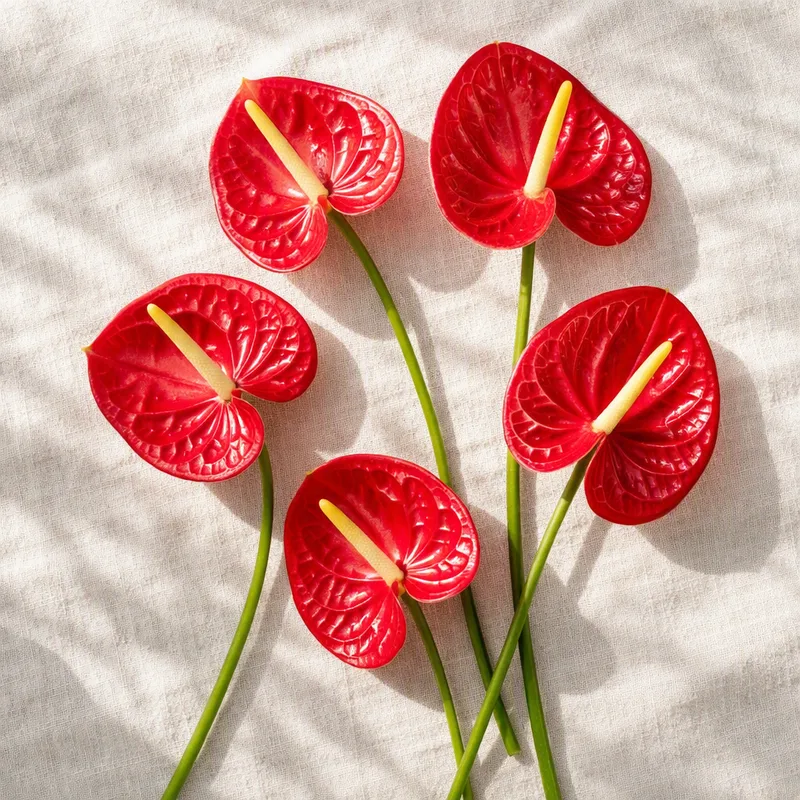
Red is the colour most people picture, and it is close to the wild plant, which has a red or pink spathe. Anthurium andraeanum was named in honour of the French plant collector Edouard Andre and comes from Colombia and Ecuador. People often search for it as the red flamingo plant, flamingo flower, flamingos flowers or by its Latin name.
One plant, several names
- Flamingo flower and flamingo plant both describe the shape of the spathe and spike.
- Tailflower is a translation of the Greek-based genus name.
- Painter's palette and oilcloth flower refer to the shiny, waxy spathe.
- Anthurium andraeanum has won the RHS Award of Garden Merit as a houseplant.
Keeping it flowering
Anthuriums need a steady routine. Provide bright, indirect light and temperatures between roughly 18 and 27 degrees Celsius. Let the top layer of compost dry between waterings, and avoid standing the pot in water. A chunky, airy mix with bark suits the roots. Feed lightly through spring and summer. Once a spathe fades, cut its stem near the base so energy goes into new growth.
Gifts and gatherings
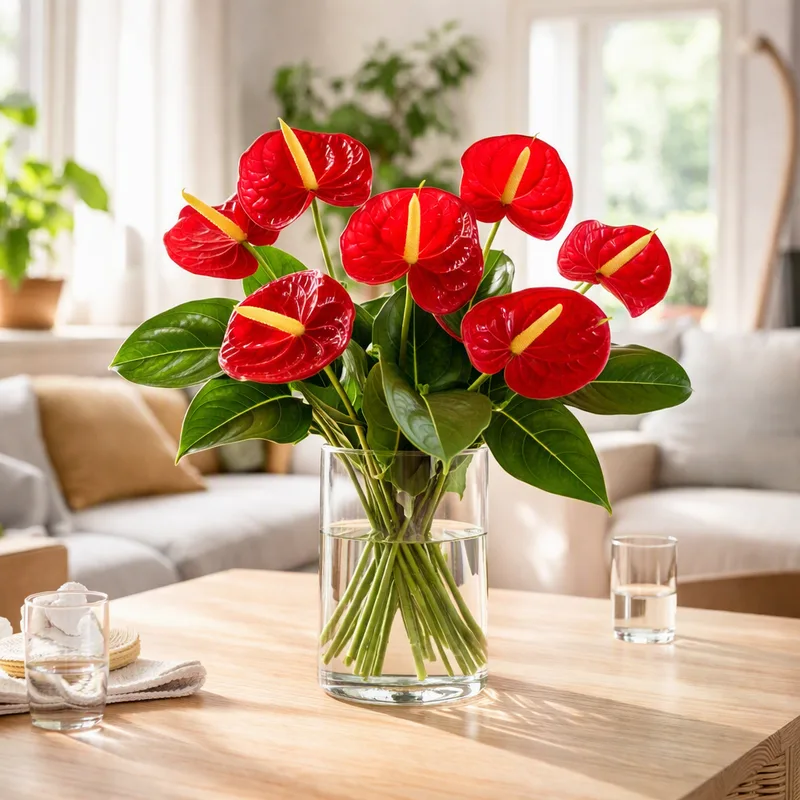
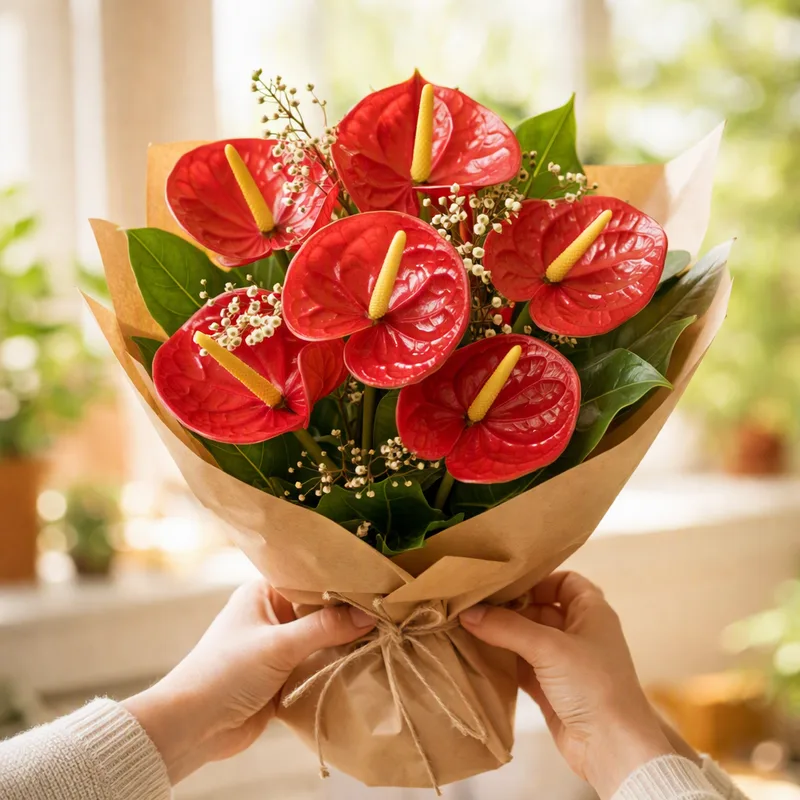
A red anthurium is a popular present for Valentine's Day, thanks to the heart-shaped spathe, and also for a housewarming or Christmas, because the red looks festive with seasonal greenery. It lasts far longer than the average bouquet.
Be careful with the sap
The plant contains calcium oxalate crystals that irritate skin and mouths. The ASPCA lists it as toxic to cats, dogs and horses. Wear gloves when pruning and call NHS 111 for people or a vet for animals if it has been eaten.