
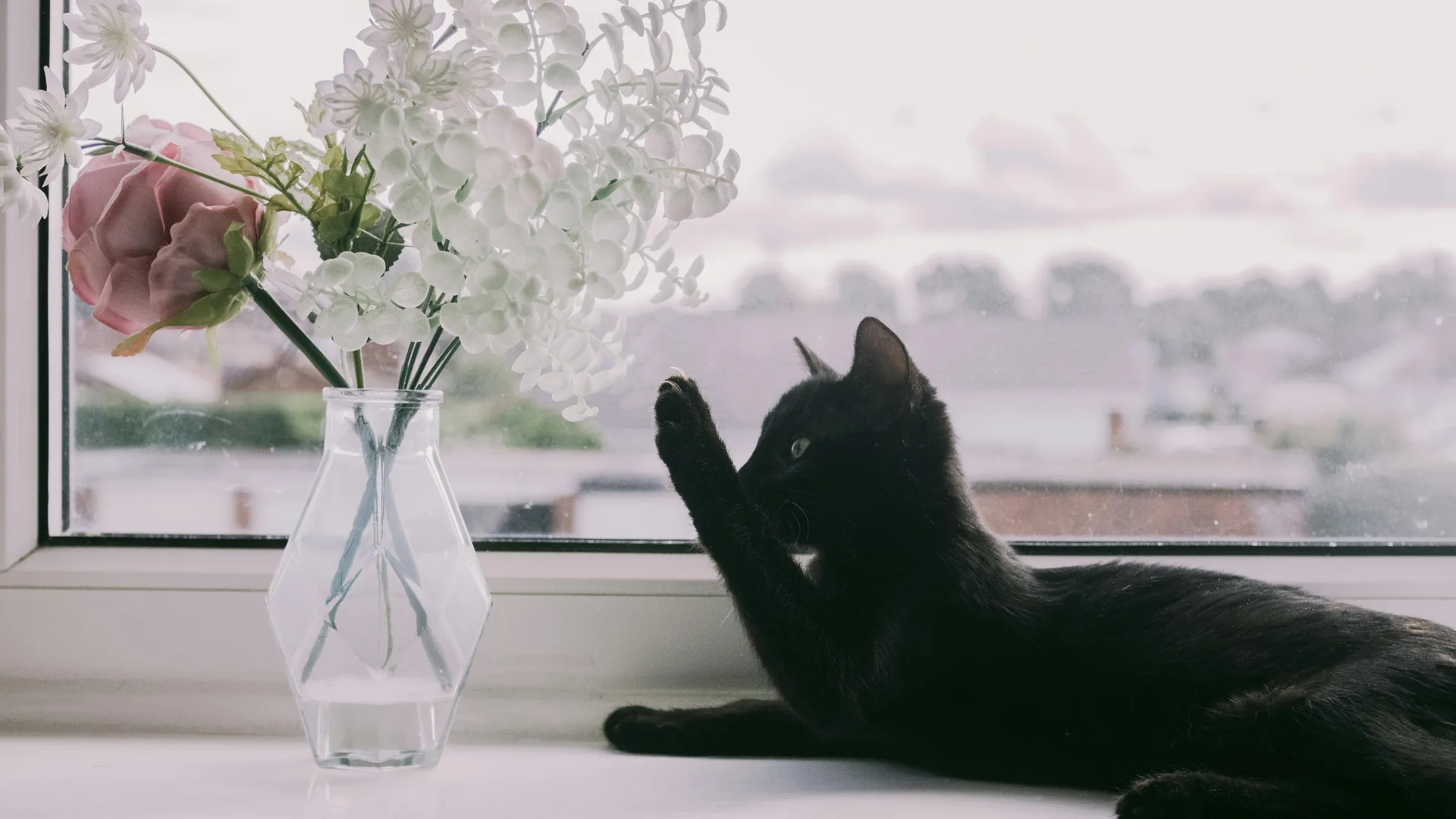
Poisonous cut flowers for dogs and cats
Some popular cut flowers can be dangerous for dogs and cats. Here you'll find a simple guide to which flowers to avoid – and which safer alternatives we recommend for households with pets.
Many common bouquets, especially mixed bouquets from supermarkets or florists, contain flowers that are directly unsuitable for households with pets. Knowing which cut flowers are most dangerous for dogs and cats helps you choose the right bouquet, place it safely, or exclude certain flowers when ordering.
Quick overview
- LiliesVery dangerous for cats, can cause acute kidney failure.
- TulipsCan cause vomiting and irritation, the bulbs are worst.
- DaffodilsHighly toxic to both dogs and cats.
- HyacinthSap irritates mouth and skin, vomiting is common.
- AmaryllisToxic for both dogs and cats, common at Christmas.
- ChrysanthemumContains pyrethrins, toxic for both species.
- Roses, gerbera, sunflowers, freesia, snapdragonsOften safer choices.
⚠ Important about lilies and cats
Lilies (genera Lilium and Hemerocallis) are extremely toxic to cats. Even small amounts of pollen, a chewed leaf or vase water can cause acute kidney failure. If you have a cat: avoid lilies entirely in the home. If you suspect exposure, contact a vet the next day.
For dogs, lilies are less dangerous, but many other common cut flowers (tulip, hyacinth, amaryllis) can cause vomiting, diarrhoea and drooling. Bulbs and roots are often more toxic than the petals themselves.
List of poisonous cut flowers
Ten common cut flowers and their risk for dog and cat. Risk levels are general: small amounts often cause mild symptoms, larger amounts can be serious.
| Flower | Cat | Dog | Common symptoms | Comment |
|---|---|---|---|---|
| LilyLilium / Hemerocallis | ⛔ Extreme | ⚠ Medium | Vomiting, drooling, lethargy, acute kidney failure (cat) | Includes pollen and vase water. Never have lilies if you have a cat. |
| Tulip | ⚠ Medium | ⚠ Medium | Drooling, vomiting, diarrhoea, abdominal pain | The bulb is most toxic. Petals usually cause milder symptoms. |
| DaffodilNarcissus | ⛔ High | ⛔ High | Severe vomiting, diarrhoea, cardiac arrhythmia, seizures | Contains lycorine. Bulbs and leaves are most dangerous. |
| Hyacinth | ⚠ Medium | ⚠ Medium | Drooling, vomiting, skin irritation | Sap can irritate mouth and skin. The bulb is most toxic. |
| Amaryllis | ⛔ High | ⛔ High | Severe vomiting, drooling, blood pressure drop, tremors | Common at Christmas and New Year. Bulb and stem particularly toxic. |
| Carnation | ✓ Low | ✓ Low | Mild stomach upset, vomiting | Generally mild. Larger amounts may cause dermatitis. |
| Chrysanthemum | ⚠ Medium | ⚠ Medium | Vomiting, diarrhoea, drooling, skin irritation | Contains pyrethrins, the same compounds found in flea treatments. |
| Hydrangea | ⚠ Medium | ⚠ Medium | Vomiting, diarrhoea, lethargy | Contains cyanogenic glycosides. Larger amounts can be serious. |
| Iris | ⚠ Medium | ⚠ Medium | Drooling, vomiting, abdominal pain, skin irritation | Rhizomes and sap are particularly irritating. |
| Gladiolus | ⚠ Medium | ⚠ Medium | Drooling, vomiting, diarrhoea, lethargy | The corm is most toxic. The cut flower causes a milder reaction. |
Want to order a bouquet without poisonous flowers?
We help you choose roses, gerbera and other safer alternatives - delivery across the UK, often the next day.
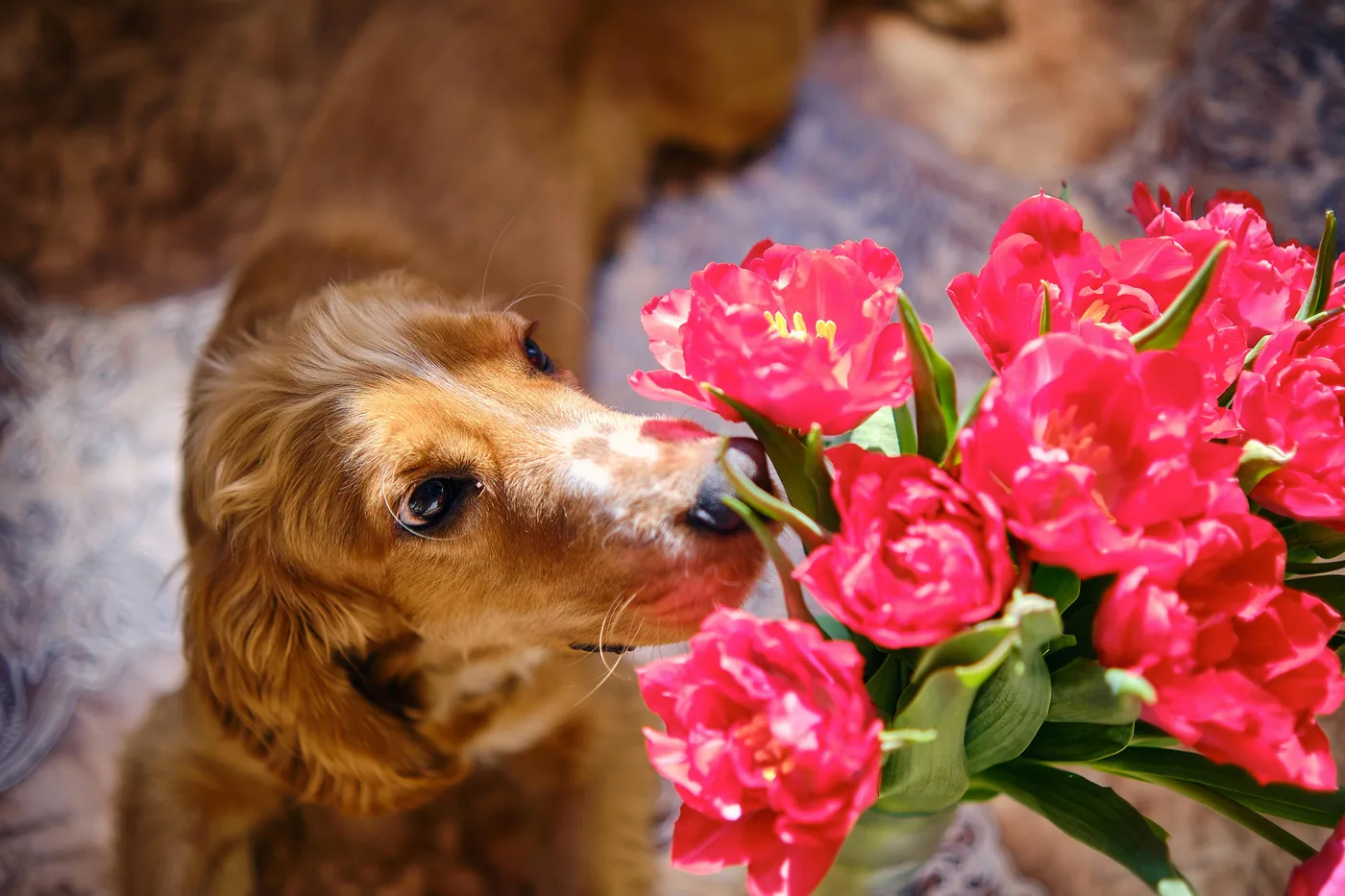
Cut flowers that are often safer choices
No plants are completely risk-free, as even non-toxic flowers can cause stomach upset if a dog or cat eats a lot. These however are not associated with serious poisoning and usually work well in homes with pets.
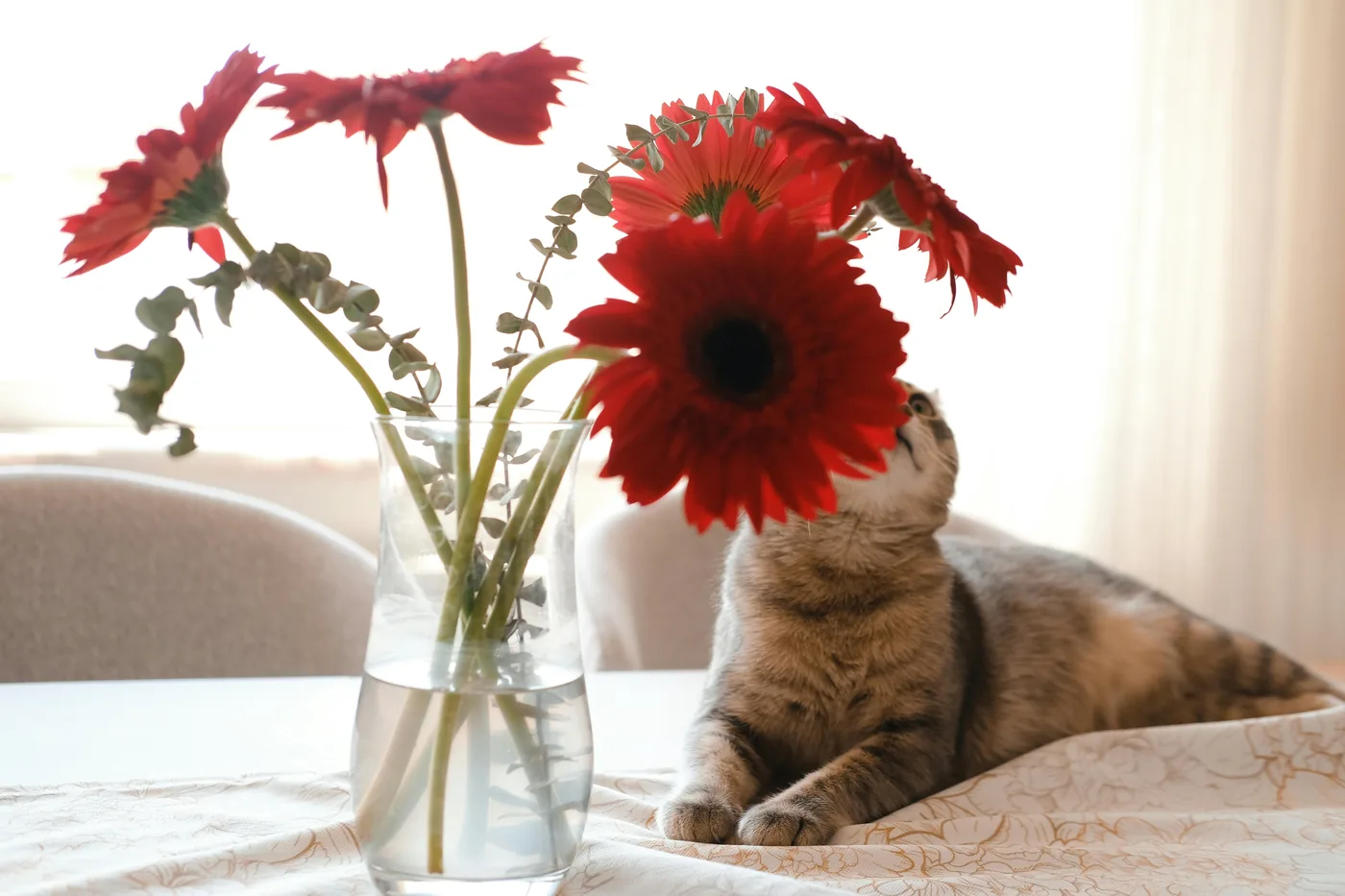
What to do if a dog or cat eats a flower?
- Remove the plant from the animal's mouth. Rinse the mouth with lukewarm water if you can do so without stress for the animal. Pick up any remaining plant material from the floor.
- Identify the flower. Save a piece of the plant or take a photo. Note the approximate amount and time. This information is valuable for the vet.
- Contact a vet immediately at any suspicion of poisoning. Call your usual vet or the nearest out-of-hours vet. The vet should always be the first choice in an emergency.
- Do not induce vomiting yourself. It can do more harm than good. Wait for the vet's instructions.
- Watch the animal carefully. Symptoms such as drooling, vomiting, lethargy, seizures or reduced urine output require an emergency vet visit, even if the animal seems lively at first.
When do symptoms appear? Timeline of poisoning
Symptom onset depends on flower, dose and animal. Never wait for 'clear symptoms' - contact a vet at the slightest suspicion.
Frequently asked questions
Which cut flowers are most dangerous for cats?
Lilies (genera Lilium and Hemerocallis) are by far the most dangerous. Even small amounts of pollen, a chewed leaf or vase water can cause acute kidney failure in cats. Other particularly risky cut flowers are amaryllis, tulip and hyacinth.
Is the vase water dangerous if a cat drinks it?
Yes, if the vase contains lilies. Pollen and plant sap dissolve in the water and can be toxic. Place lilies out of reach and never let a cat drink from the vase. If you suspect exposure, contact a vet the next day.
My dog chewed on a tulip, should I be worried?
Tulips usually cause stomach upset in dogs (vomiting, drooling, diarrhoea). The bulbs are more toxic than the petals. Rinse the mouth, remove plant material, offer water and contact a vet if symptoms are severe or last more than a couple of hours.
Which cut flowers are often better choices if I have pets?
Roses, gerbera, sunflowers, snapdragons, freesia and most orchids are often better choices. No plant is completely risk-free, as even non-toxic flowers can cause stomach upset if eaten in large amounts, but these are not associated with serious poisoning.
How quickly do symptoms appear in poisoning?
It varies. Lily poisoning in cats causes drooling and vomiting within 1–3 hours. Kidney effects appear after 12–72 hours. Tulip and hyacinth often cause stomach upset within an hour. Don't wait for symptoms - contact a vet immediately at any suspicion.
Who do I call in an acute poisoning?
Call your vet or the out-of-hours vet first. You can also reach the Animal PoisonLine on 01202 509000 for guidance (paid service in the UK), but the vet should always be the first choice in an emergency with an animal.
Is lily pollen dangerous even if the cat hasn't eaten the flower?
Yes. Pollen that sticks to the fur and is licked off during grooming can cause poisoning. If the cat has yellow pollen on its fur, gently wipe it off with a damp cloth and call a vet for assessment.
Are amaryllis and poinsettia safe to have at home?
Amaryllis is toxic for both dogs and cats - place it out of reach. Poinsettia is milder than its reputation but can cause stomach upset; keep it inaccessible. Safer Christmas alternatives are freesia, snapdragons and rose bouquets.
What do I do if I'm unsure which flower the animal ate?
Save a piece of the plant or take a photo. Call a vet immediately and describe amount, time and any symptoms. Do not try to induce vomiting without veterinary instruction.
Is hydrangea dangerous for dogs and cats?
Hydrangea leaves and buds contain cyanogenic glycosides that can cause vomiting, diarrhoea and lethargy at larger intake. Smaller chewing usually causes mild stomach upset. Contact a vet if symptoms persist.
How do I best protect my cat from lilies?
The simplest solution is not to bring lilies into the home at all. Tell the florist when ordering a bouquet: 'no lilies'. Also ask for the bouquet without daylilies (Hemerocallis) and other Lilium relatives.
Is there a difference between true lilies and 'lilies' that aren't real lilies?
Yes. Many flowers are called 'lily' without belonging to the genus Lilium (e.g. lily-of-the-valley, calla, peace lily). They have their own risks but are not as nephrotoxic as true lilies. When in doubt, treat all 'lilies' as potentially poisonous.
Related guides
Dive deeper into specific flowers mentioned on this page, or explore safer alternatives.
Are lilies poisonous to cats?
Complete guide on Lilium and Hemerocallis, why they are so dangerous and what to do at exposure.
Safer flowers for households with pets
Roses and other often safer alternatives. Colours, symbolism and care for a calm home.
Common spring plants that are toxic to dogs
Daffodils contain lycorine. Learn the symptoms and how to reduce risk.
Bouquets that often suit households with animals
Order cut flowers and bouquets with roses, gerbera, sunflowers and other gentler alternatives.
Choose flowers with your pets in mind
Explore bouquets and cut flowers that often suit homes with a dog or cat better.
See all our bouquetsMore guides you might find useful
Disclaimer. This guide is general information and does not replace veterinary advice. In suspected poisoning, a vet must always be contacted first.